
 English
 Español
 Apr 29,2026
In early 2025, a premium spirits brand in Scotland made a tough call: it halted a new gift box launch because the magnetic closure failed on 8% of units. The culprit was not the design, but the production line—a ten-year-old former that could not adapt to the slightly thicker, FSC-certified greyboard chosen to meet the retailer’s sustainability requirements. The incident cost nearly £180,000 in rework and delayed the seasonal campaign.
This is no isolated case. Across luxury packaging, cosmetics, electronics, and high-end confectionery, brands are demanding faster turnaround, near-perfect quality, and materials that tell an environmental story. The rigid box making machine that folds, wraps, and glues those premium boxes is at a turning point. Drawing on field data from PINCHUANG’s engineering teams, conversations with packaging directors, and industry benchmarks, we’ve identified five trends shaping this equipment category in 2026—and how they affect your day-to-day decisions.
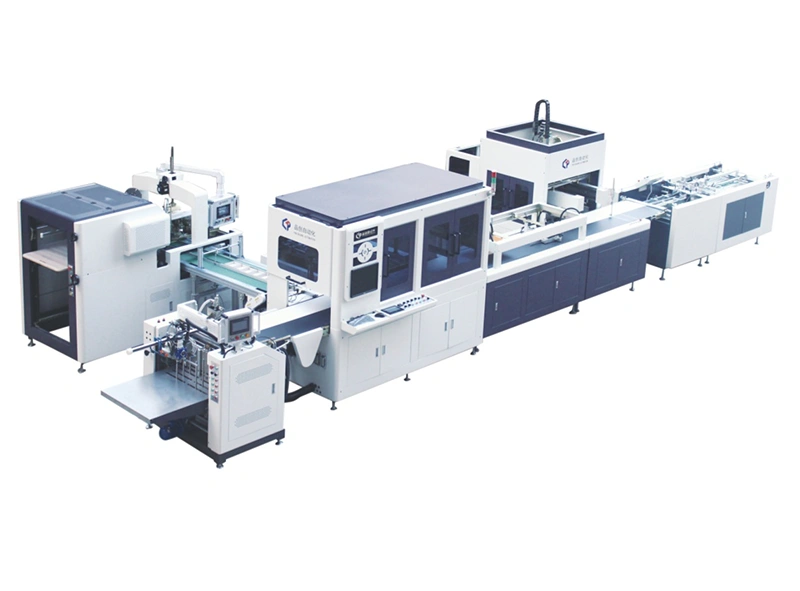
1. Modular Tooling Finally Ends the “One-SKU, One-Machine” Era
For years, a mid-size rigid box producer would buy a dedicated machine for the classic shoebox, another for a double-wall tray, and yet another for a book-style lid. When a beauty brand ordered 5,000 boxes with a window cutout and a different neck depth, the line stood idle for hours during changeover—or the job was turned away.
The core shift in 2026 is breaking this mold. Instead of fixed forming stations, new lines use quick-change modular tooling that can be swapped in under 15 minutes by two operators. Magnetic or pneumatic clamping replaces bolts, and tooling carts with RFID tags let the HMI auto-load recipe parameters. One packaging operation in Guangdong reduced changeover from 90 to 12 minutes and now runs eight SKUs per shift profitably.
This design approach also unlocks capacity for e-commerce brands that need seasonal, limited-edition packaging without the volume commitment that traditionally justified a dedicated line. The message is clear: agility is no longer optional.
2. Sustainable Materials Stop Being a “Nightmare Feedstock”
The push for monomaterial structures, high-recycled-content chipboard, and water-based adhesives has been strong since 2023. But many converting lines struggled: recycled board dust clogged vacuum belts, embossing on softer fibres tore, and glue absorption rates varied wildly, leading to open corners.
Now, vacuum systems with self-cleaning cyclones and variable-suction zones are becoming standard. Creasing stations use servo-controlled pressure based on real-time caliper readings, so a board that is 0.3 mm thicker gets exactly the right nip. A UK-based packaging group reported that after retrofitting its wrapping section, board jams dropped by 70% and glue consumption fell by 12% thanks to closed-loop adhesive control.
This matters because sustainability is no longer a nice-to-have. Major retailers now mandate FSC-certified board, and the EU’s Packaging and Packaging Waste Regulation is pushing for recyclability by 2030. Machinery must handle materials that are less forgiving—and do so without sacrificing the tight corner folds and crisp edges that buyers expect. Manufacturers that ignore this shift risk losing not only material savings but also contracts that hinge on verifiable environmental compliance.
To see how these material handling upgrades integrate into an existing line, explore the retrofit options available from equipment providers who have already tested high-recycled-content boards in volume runs.
3. AI-Powered Vision Moves from “Nice to Have” to “Must-Have”
In the past, a camera system checked whether the lid was crooked. Today, deep-learning vision inspects 360-degree surface defects, invisible glue smears, and magnet polarity in real time at speeds exceeding 40 boxes per minute. It learns from false rejects and adapts to subtle batch variations, keeping false-positive rates below 0.5%.
A cosmetics manufacturer in Korea cut customer returns by 90% after installing a multi-camera tunnel at the exit of its forming line. The system flags every hairline scratch on matte black paper and even verifies foil stamping alignment against the master artwork. The data is stored per-box, creating a digital passport that luxury brands increasingly request as part of supplier quality audits.
Integration has also become simpler: vision results feed directly into a rejection gate and alert operators via mobile app, so a dimensional trend drift is caught before a full shift’s output is wasted. This is where real savings hide—not in catching bad boxes, but in preventing them. Brands are already writing vision-inspection requirements into supplier qualification documents, turning this from a differentiator into a prerequisite.
4. Remote Service Platforms Turn Downtime into Minutes, Not Days
When a servo drive faults at 2 a.m. in a factory that runs three shifts, waiting for a technician to fly in is a business risk. In 2026, leading machinery builders are offering secure remote-access platforms with augmented reality (AR) guidance, live parameter override, and predictive alerts based on vibration and current signatures.
PINCHUANG’s service logs show that 65% of recent service calls—mostly sensor recalibration, glue temperature tweaks, or PLC alarm resets—were resolved remotely in under 45 minutes. The platform uses encrypted tunneling and operator-side video with AR overlays, so the local maintenance team can follow step-by-step instructions with pinpoint accuracy. This has cut mean-time-to-repair by more than 60% for connected lines.
Beyond troubleshooting, the data collected on motor torque, belt wear, and cycle counts feeds a predictive maintenance algorithm. The machine now tells you when a timing belt is likely to fail—not the other way around. For a 24/7 production environment, that prevents unplanned stoppages that can cost €2,000 per hour.
For manufacturers still relying on phone support and email attachments, upgrading to a connected service model is not about technology hype—it’s about survival when skilled technicians are scarce.
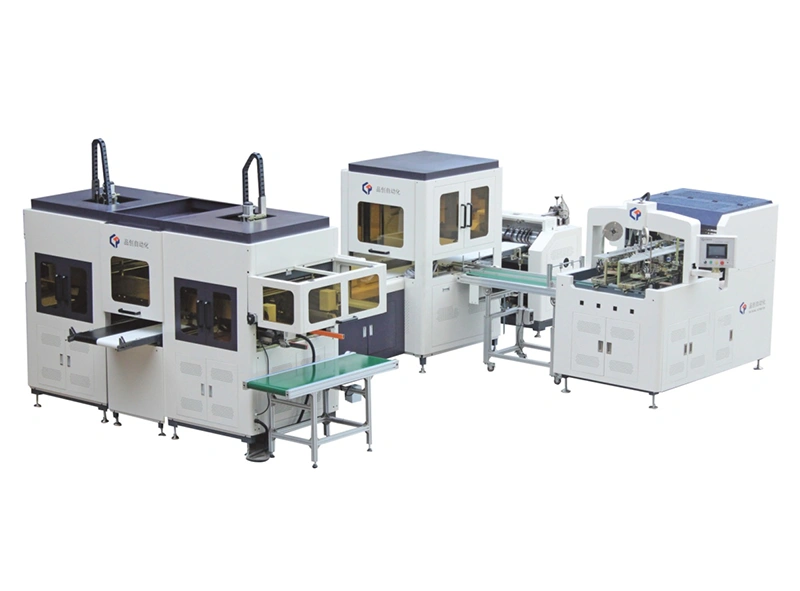
5. Throughput Without Compromise: The Shift to High-Speed, High-Precision Lines
Speed kills quality—unless the entire kinematic chain is rethought. The trend in 2026 is not simply faster motors but re-engineered motion profiles that minimize vibration and extend dwell time at critical forming and pressing stages. By using linear motors and lightweight carbon-fibre transfer arms, some lines now reach 50–55 boxes per minute while holding corner gap tolerances under 0.2 mm.
This matters because e-commerce fulfilment centers and luxury subscription boxes are compressing lead times. A four-week delivery window a few years ago is now often ten business days. To meet this, packaging converters need equipment that accelerates without sacrificing the craft look.
Simultaneously, multi-axis pressing stations with independent pressure zones ensure that even at high speed, the wrap is bubble-free and the edges are sharp. A large contract packaging group in Poland upgraded its pressing and wrapping cell and now outputs 35% more boxes per shift with half the overtime hours.
The business case for high-speed precision is straightforward: more output per square meter of factory floor, and less labor-intensive rework. If your monthly volumes are trending toward 500,000+ boxes, the economics of a next-generation line start to look compelling.
Where These Trends Converge
Five trends, one common thread: flexibility, sustainability, intelligence, connectivity, and speed are no longer buzzwords. They are measurable capabilities that separate growth-oriented converters from those struggling with margin erosion.
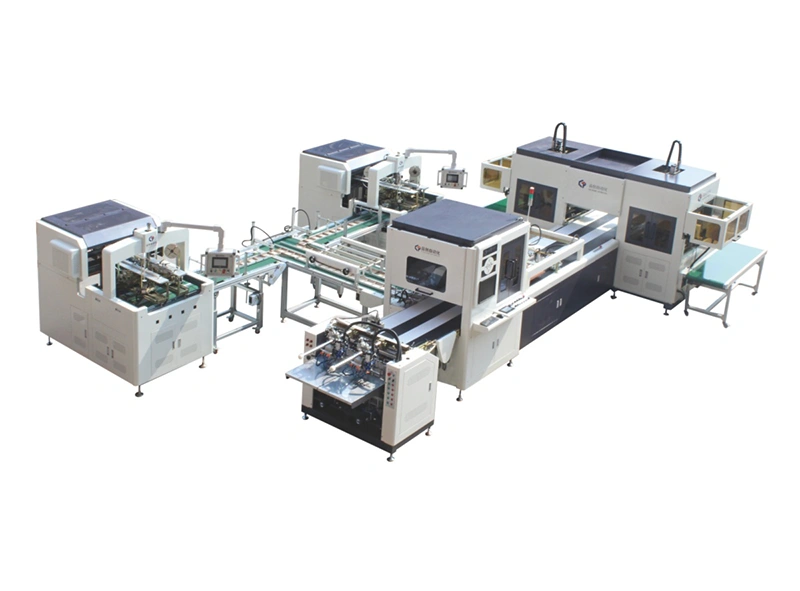
A rigid box making machine that integrates modular tooling, handles recycled board well, inspects itself, reports its health, and runs fast without vibration becomes more than hardware—it becomes a strategic asset that wins contracts from demanding global brands.
If you are scoping a line upgrade or a new project, look beyond the spec sheet. Ask for video of real changeovers, request references from converters running eco-board, and test the remote support before signing. The technology exists; the difference lies in how it’s implemented.
For a deeper understanding of how these engineering principles are built into a fully integrated forming and wrapping system, visit PINCHUANG’s rigid box solutions page to see machine configurations tailored to mid-to-high volume luxury packaging.