
 English
 Español
 Jun 24,2026
When a luxury candle brand suddenly doubled its seasonal order, its packaging supplier faced a nightmare. The existing semi‑automatic setup, reliable for years, could not keep up — glue drying times, manual corner‑forming steps and constant changeovers turned a profitable contract into a frantic race against deadlines. The production manager later admitted: “We focused on the price tag of the equipment, but we never asked the questions that actually determine daily output.”
That story is far from unique. Packaging converters investing in a rigid box production line often concentrate on a single specification — strokes per minute or tray price — while missing the factors that separate a strategic asset from a persistent bottleneck. Based on interviews with plant managers and equipment engineers across Asia and Europe, three criteria consistently emerge as make‑or‑break, yet they rarely appear on a standard datasheet.
Factor 1: Format Agility — More Than “Quick Changeover”
Many suppliers promote “quick changeover,” but true format agility goes far deeper. A luxury rigid box portfolio today must handle telescopic lids, magnetic closures, drawer boxes, book‑style cases, and even internal trays with different board thicknesses — sometimes within the same batch. When a cosmetics brand launches a limited‑edition gift set, the converter who can pivot from a deep drawer box to a shallow lid format in under 20 minutes captures the order; the one who needs 90 minutes and a specialist technician loses it.
What separates genuinely adaptable systems from rigid ones is modular tooling architecture. On a well‑designed modular box forming technology, the critical forming stations — corner‑folding fingers, platen dimensions, glue application patterns — are tool‑less or use quick‑release cartridges. This enables the line to process 1.5 mm greyboard for a smartphone box in the morning, then switch to 2.5 mm chipboard for a wine gift set after lunch without requiring a mechanical overhaul.
Ask your potential supplier not just for the changeover time, but for the recipe management capabilities: can the machine store 100‑plus box profiles with servo‑driven presets? Will the same forming belt handle both matte‑finished paper and textured wrap without creasing? These details determine whether your “flexible” system truly adapts, or forces you to limit the portfolio you sell to brand owners.
Factor 2: Consistent Output Under Real Conditions
Datasheet cycle speeds are measured in a climate‑controlled demo room with pre‑scored board and a single box style. Real production floors are different: humidity swells the board, operators load slightly misaligned sheets, and the afternoon shift may run 12‑hour stretches without stopping. That is why every plant manager we spoke with stressed that process capability (Cpk) matters far more than headline speed.
When assessing a rigid box making machine, you need to verify the output you can actually achieve across a three‑shift operation. A machine that produces 35 flawless boxes per minute for three hours but jams every 40 minutes will deliver fewer sellable units per shift than a system running at a steady 28 boxes per minute with a reject rate below 0.5%. A high‑speed rigid box manufacturing system with intelligent jam‑recovery — sensors that detect mis‑fed corners and auto‑retract without operator intervention — preserves both throughput and board stock.
One practical evaluation method: request a sample run using your own materials, not the supplier’s perfectly conditioned stock. Observe the jam‑clearing sequence and ask for uptime logs from existing installations producing similar box formats. According to ISO 22477‑10 for packaging machinery performance evaluation, mean time between failures (MTBF) and mean time to repair (MTTR) are the metrics that translate directly into monthly delivered volume. Insist on seeing them.
Factor 3: Lifecycle Support That Prevents Silence
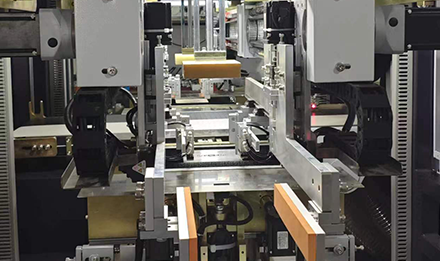
The third factor is the one converters only appreciate six months after installation: support infrastructure. A comprehensive box assembly solution involves more than hardware — it includes remote diagnostics, documented troubleshooting guides, local spare parts availability, and proactive maintenance schedules aligned with board dust accumulation patterns.
Stories circulate in the industry about packaging firms that bought advanced equipment, only to discover that the supplier’s engineering team was a 12‑hour flight away and spoke a different language. When a critical servo drive fault occurs during peak season, three days of downtime can erase the margin earned over the preceding quarter. Savvy buyers now include service‑level agreements (SLAs) in the purchase contract: guaranteed remote response within four hours, on‑site support within 48 hours, and spare‑part delivery commitments.
Look for signs of a supplier’s engineering philosophy. Do they conduct vibration analysis on forming components during factory acceptance testing? Is there a condition‑monitoring module that alerts you when a timing belt is degrading before it snaps? These are indicators that the system was designed with the full ownership experience in mind, not just the on‑screen spec comparison.
Turning Insight Into a Concrete Selection
The three factors above — format agility, real‑world consistency, and lifecycle support — form a framework that protects your investment far better than a simple price‑per‑minute comparison. They also change the questions you bring to equipment providers.
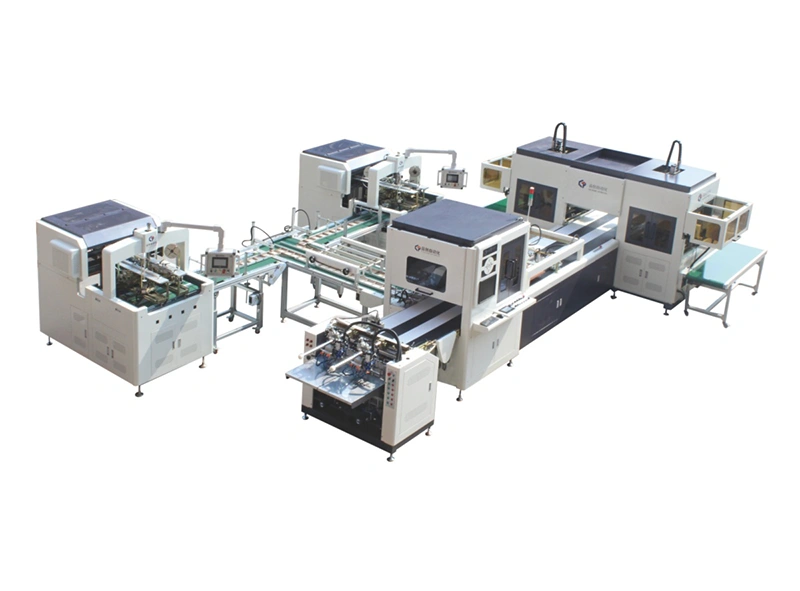
If you want to short‑cut the evaluation process, solutions that incorporate modular tooling, servo‑driven presets, and built‑in condition monitoring already address many of these risks at the engineering level. Pinchuang’s integrated rigid box system, for instance, was developed specifically to reduce changeover times to under 15 minutes across standard luxury formats while maintaining process capability above 1.33. If you are currently mapping out your next capacity upgrade, it may be worth seeing the detailed technical data and actual uptime records from running installations.
Ultimately, investing in a rigid box making machine is a decision that will shape your operational flexibility for at least five years. Taking the time to stress‑test a shortlisted system against real‑world production scenarios — messy board stacks, urgent format switches, late‑night shifts — is the most reliable path to choosing a line that grows with your customers’ packaging ambitions.
References: Smithers, “The Future of Rigid Packaging to 2027”; ISO 22477‑10:2021 “Packaging machinery — Vocabulary — Part 10: Performance evaluation”. Customer anecdotes have been anonymized to protect commercial confidentiality. This article is for informational purposes; equipment specifications should be verified with the manufacturer for your specific application.