
 English
 Español
 Jun 09,2026
Mark pulled another 14-hour shift last December. His gift box facility had just landed its largest holiday order yet, and the single-station line that had served them faithfully for three years was suddenly the bottleneck. He started sketching layouts for a second machine, then stopped. A neighboring plant manager had mentioned “double station” systems that could double throughput without doubling floorspace. But was the higher upfront cost justifiable for seasonal peaks? And would his operators cope with the added complexity?
Mark’s dilemma is playing out in packaging companies worldwide. As e-commerce and luxury unboxing experiences drive demand for precisely wrapped, high-rigidity boxes, manufacturers face a pivotal equipment choice: stick with the simplicity of a single-station approach or step up to a two-station configuration. This article strips away the brochure language to examine the real operational, financial, and strategic trade-offs – so you can make a decision grounded in your product mix, not in someone else’s spec sheet.
Why Station Count Matters More Than You Think
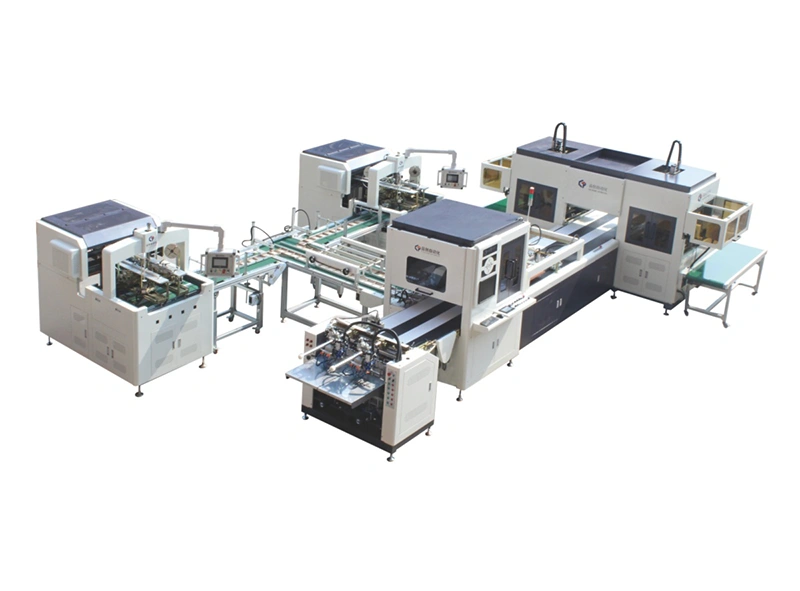
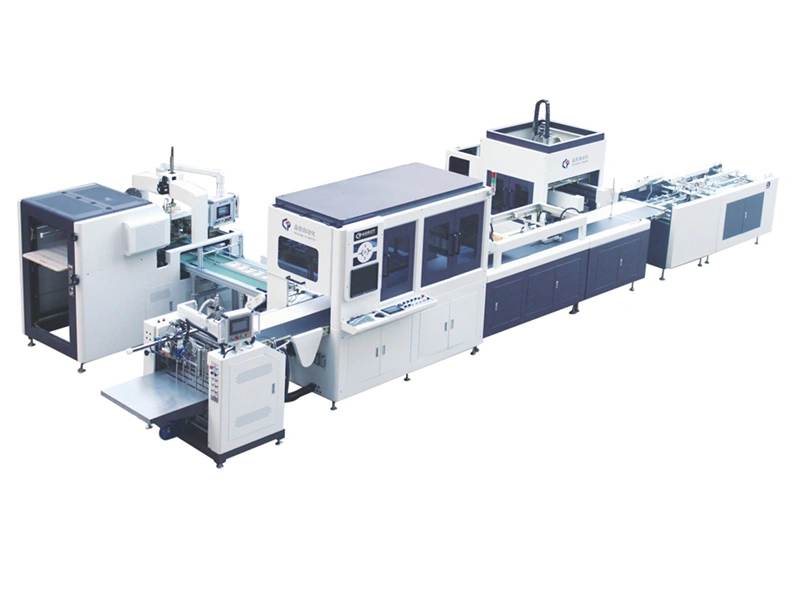
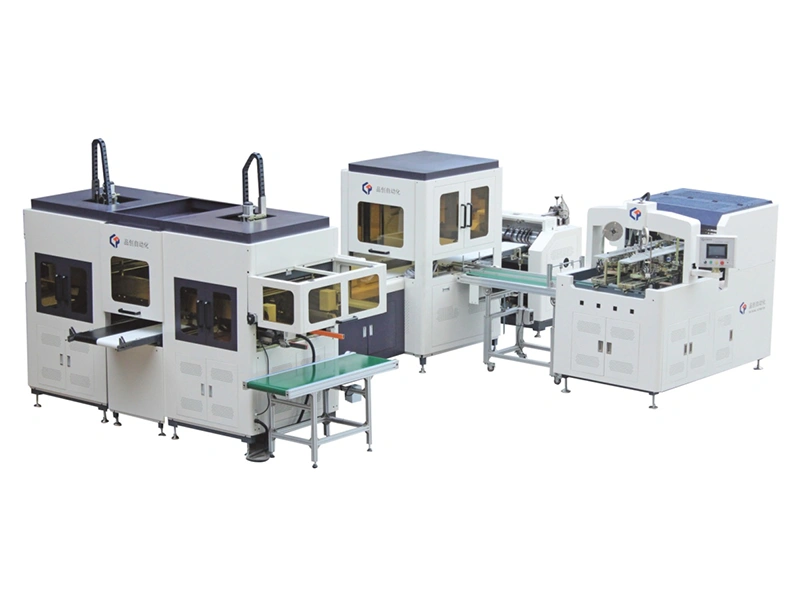
In automated box finishing, a “station” typically refers to a position where a specific operation is performed – wrapping, folding, pressing, or corner-tucking. A single-station cell performs all operations sequentially at one location. A double-station setup splits these tasks: while one station wraps the base paper around the tray, the second simultaneously handles lid assembly or corner forming for the next box. The parallelism dramatically changes cycle time, but it also reshapes maintenance routines, changeover logic, and even the way scrap is managed.
The underlying mechanics may be described by what the industry often calls a rigid box making machine – a system that automates the wrapping and assembly of hard covers over greyboard. When evaluating such equipment, the station architecture becomes the single biggest factor influencing daily output and operator workload. Yet many buyers fixate on “boxes per minute” without examining whether their batch sizes actually reward parallel processing.
The Five Dimensions That Actually Drive Your Choice
Let’s move beyond data sheets and look at how single and double station lines behave on a real production floor.
1. Throughput and Cycle Time
Single-station systems excel at consistent, moderate-speed production. Cycle times typically range from 15 to 25 seconds per box, depending on format and material. Double-station configurations overlap operations, often cutting effective cycle time to 8–14 seconds. However, that improvement assumes continuous, uninterrupted flow. If your upstream board feeding or downstream packing can’t keep pace, the double station’s extra capacity sits idle. For operations running 5,000–10,000 boxes per day, single station often suffices. Beyond 15,000 daily units with stable demand, the dual-station arithmetic starts to make sense.
2. Footprint and Line Layout
This is where assumptions get overturned. A double-station machine isn’t twice as long as a single – typically it’s only 30–50% larger because stations share frame, control systems, and safety guarding. But the real footprint question is about auxiliary equipment: double stations demand more sophisticated board infeeds and higher-capacity stacking units. When advanced box automation platforms are configured for dual stations, the total line length can stretch by 3–5 meters compared to a standalone single-station work cell, a detail often glossed over in preliminary quotes.
3. Changeover Agility
If your facility handles more than five box formats per shift, single-station systems offer a clear advantage. With all tooling located in one position, a skilled operator can complete a full size change in 10–15 minutes. Double stations require synchronised adjustments across two stations, pushing changeover times to 20–35 minutes – and demanding a higher skill level to avoid misalignment between the two timing sequences. For short-run, high-mix production, this alone can negate the speed gains.
4. Capital and Lifetime Cost
A double-station line costs 60–80% more upfront than a comparable single-station machine. Maintenance complexity rises, too: twice the servo drives, twice the pneumatic actuators, and a more intricate PLC program. Over a seven-year lifecycle, total cost of ownership per box produced tends to favor double stations only when utilisation stays above 70%. Below that threshold, the simpler machine’s lower depreciation and spare parts burden wins out.
5. Operator Skill and Training
Single-station cells can be run effectively by operators with basic training. Double stations need someone who understands inter-station timing, buffer management, and rapid fault diagnosis across two simultaneous workflows. In tight labor markets, this skill premium can add hidden cost and risk.
Quick-Reference Comparison
| Factor | Single Station | Double Station |
| Effective cycle time | 15–25 sec/box | 8–14 sec/box |
| Optimal daily volume | <10,000 boxes | >12,000 boxes |
| Floorspace (machine only) | 6–10 m length | 9–15 m length |
| Typical changeover | 10–15 min | 20–35 min |
| Operator experience needed | Entry-level | Intermediate to advanced |
| Upfront investment | Base | +60–80% |
| Best for | High-mix, moderate volume | Low-mix, high volume |
Making the Match: Scenarios Where Each Configuration Wins
Choose single station when:
-
Your average batch size is below 2,000 units per format.
-
You produce a wide range of box styles – hinged lids, telescopic lids, book-style, drawer boxes – with frequent changeovers.
-
Floorspace is constrained and cannot accommodate extended material handling.
-
You’re building redundancy into your line, opting for two independent single-station machines rather than one double (a valid strategy for risk mitigation).
Choose double station when:
-
You run dedicated lines for a handful of box formats, with runs exceeding 5,000 units each.
-
Your downstream processes (gift wrapping, fulfillment) are already automated and can absorb higher throughput.
-
Labor is available with technical skills, or you’re prepared to invest in structured training.
-
You’re consolidating production from multiple aging machines into one high-output cell.
It’s here, when decision-makers weigh configuration against their unique product mix, that many reach for tailored hardcover box production solutions to move beyond generic comparisons and examine how specific machine layouts handle their tray depths, paper grammages, and corner geometries.
One often-overlooked consideration: the type of box automation equipment that dominates today’s market has seen modular upgrades that blur the line between single and double stations. Some manufacturers now offer field-upgradable platforms – start with one station, add a second module when volume justifies it. This approach preserves capital efficiency while keeping future throughput expansion viable.
Common Pitfalls When Scaling Box Production
Pitfall 1: Overestimating Utilization
A double station rated at 25 boxes per minute sounds impressive, but if your feeding system delivers boards inconsistently, real output may settle at 15–18. Always benchmark against your existing upstream and downstream constraints, not the machine’s isolated speed.
Pitfall 2: Ignoring the Scrap Factor
Dual stations compound alignment errors. A 0.5mm misregistration at Station 1 becomes a 1.0mm defect at Station 2, increasing scrap rates – and material waste on premium covering papers can quickly erode margin. Validate alignment stability during prolonged runs before committing.
Pitfall 3: Neglecting Maintenance Windows
Two stations mean twice the preventive maintenance touchpoints. If your maintenance team already struggles to keep single-station machines in peak condition, a double-station line may exacerbate downtime rather than reduce it.
When comparing different rigid box making machines, cycle time is only one factor. The station architecture fundamentally shapes how a line handles peaks, formats, and people.
Where Pinchuang Fits Into Your Selection Process
Pinchuang has spent years working alongside packaging converters who face exactly this single-versus-double station decision. Rather than pushing a one-size-fits-all answer, our engineering teams focus on mapping your actual order book to machine configurations – simulating changeover sequences, bottleneck analysis, and labor scenarios before a single bolt is specified.
If you’re evaluating whether a single or double station approach fits your production floor, explore Pinchuang’s scalable box automation cells to see configurable platforms that adapt as your business grows. The right choice isn’t about more stations; it’s about the right stations for the boxes your customers actually order.
Ultimately, the right rigid box making machine depends on your product mix, volume stability, and team capability. You can benchmark these variables against real production data from your own facility – and if you need help structuring that analysis, we’re here to walk through it without the sales pressure.
This guide draws on publicly available packaging engineering references and field experience from box manufacturing operations. Performance figures are indicative ranges based on typical covering materials and greyboard specifications; actual results vary with product design, environmental conditions, and operator proficiency. Always request a factory acceptance test protocol aligned to your specific box formats when evaluating equipment.