
 English
 Español
 Aug 29,2026
If you are producing small rigid boxes—jewelry boxes, watch boxes, cosmetic boxes, or small gift boxes—and facing space constraints on your production floor, a compact rigid box former may be the practical solution you need. The key considerations are not just speed, but also machine footprint, changeover flexibility, and precision at small dimensions.
This article explains the unique challenges of small-box production, what a compact rigid box former offers, and how to evaluate whether this type of equipment fits your operation.
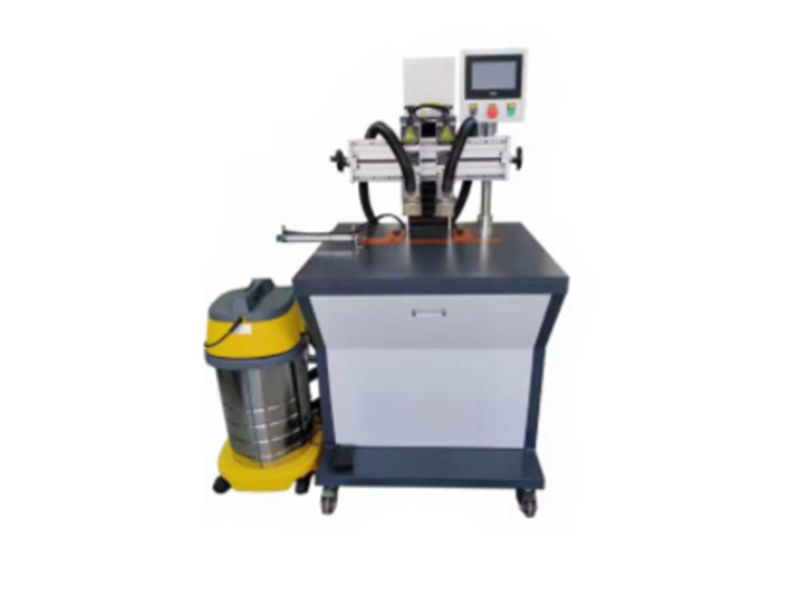
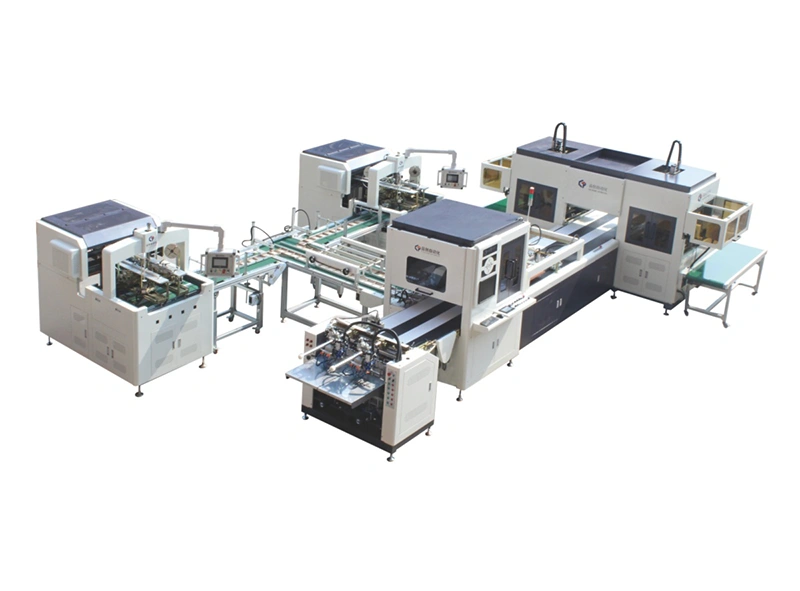
[Image: Compact rigid box former on a production floor]
What Makes Small Rigid Box Production Different?
Producing small rigid boxes is not simply a scaled-down version of standard box manufacturing. The challenges are distinct and often more demanding.
1. Precision Requirements Are Higher
When box dimensions shrink, tolerance issues become more visible. A ±0.5mm deviation on a 500mm box may go unnoticed, but the same deviation on a 50mm jewelry box is immediately apparent. Small boxes require higher relative positioning accuracy to maintain consistent appearance and proper closure.
2. Material Handling Is More Difficult
Smaller boxes mean smaller paper and cardboard pieces. Feeding, folding, and forming miniature components demand more precise material handling. Thin paper (80–200 g/m²) and thin grey board (1–3mm) are common in small-box production, and these materials are more prone to wrinkling, tearing, or misalignment during automated processing.
3. High-Mix, Low-Volume Orders Are Common
Small rigid boxes are typically used for premium products—jewelry, watches, cosmetics, electronics accessories. These markets often require frequent format changes. A single production shift may involve multiple box sizes, colors, and material combinations. This makes changeover speed and flexibility as important as raw production speed.
4. Floor Space Is Often Limited
Many manufacturers of small premium packaging operate in urban facilities where floor space comes at a premium. Installing a full-size rigid box line may not be feasible. A compact machine footprint becomes a decisive factor in equipment selection.
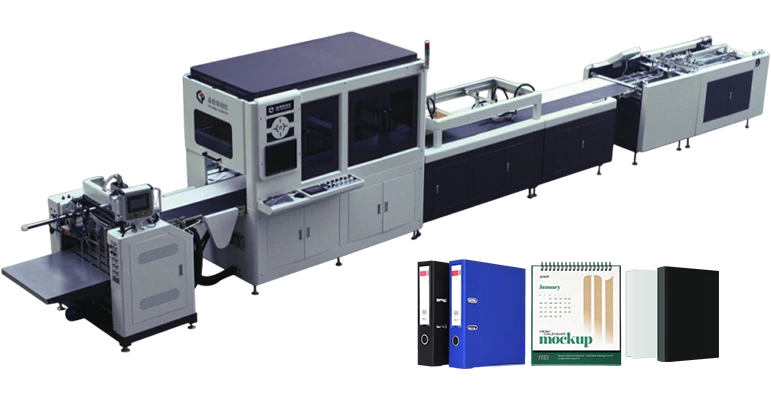
What Is a Compact Rigid Box Former?
A compact rigid box former is an automated machine designed specifically for small-format rigid box production with a reduced physical footprint. It integrates multiple processes—paper feeding, corner pasting, forming, and pressing—into a streamlined system that occupies significantly less floor space than standard-size rigid box lines.
Key characteristics include:
-
Smaller maximum box size (typically up to L300×W260×H100mm)
-
Reduced machine dimensions compared to standard models
-
Integrated multi-process design that eliminates the need for separate stations
-
Servo-driven precision for accurate small-part handling
-
Visual positioning systems to ensure registration accuracy at small scales
[Image: Diagram showing compact machine layout vs standard machine footprint]
When Should You Consider a Compact Rigid Box Former?
Not every operation needs a compact machine. Here is a decision framework to help you evaluate whether this equipment type fits your production profile.
| Production Characteristic | Consider Compact Rigid Former | Consider Standard-Size Machine |
|---|---|---|
| Typical box dimensions | Under L300×W260×H100mm | Over L300×W260×H100mm |
| Available floor space | Limited; need to maximize density | Ample; can accommodate larger footprint |
| Order mix | High variety, small batch sizes | Low variety, high volume |
| Primary markets | Jewelry, watches, cosmetics, small gifts | Electronics, footwear, large gift boxes |
| Precision requirement | Very high (small tolerances visible) | Standard |
| Production speed need | 20–35 boxes/min sufficient | 40+ boxes/min required |
If your answers align with the left column, a compact rigid box former is worth evaluating.
Key Specifications to Evaluate
When comparing compact rigid box formers, pay attention to these specifications:
| Parameter | What to Look For | Why It Matters |
|---|---|---|
| Minimum box size | As small as possible (e.g., L45×W45×H15mm) | Determines the smallest box you can produce |
| Maximum box size | Must cover your largest planned box | Prevents capacity gaps |
| Machine dimensions | Compare actual footprint, not just specs | Affects floor layout and density |
| Positioning accuracy | ±0.1mm or better | Critical for small-box quality |
| Paper thickness range | 80–300 g/m² | Covers common wrapping papers |
| Grey board thickness | 1–3mm | Standard range for rigid boxes |
| Changeover time | How long to switch box sizes | Impacts efficiency in high-mix production |
The Role of Visual Positioning in Small-Box Production
For small rigid boxes, visual positioning systems are not a luxury—they are often a necessity. Here is why.
In small-format production, the margin for error is minimal. A visual positioning system uses a camera to detect the exact position of materials and guides robotic or servo-driven placement with ±0.1mm accuracy. This ensures:
-
Consistent alignment of wrapping paper to grey board
-
Precise corner folding without creasing or tearing
-
Accurate placement of decorative elements or logos
-
Reduced material waste from misaligned boxes
The Yamaha visual positioning systems used in some compact rigid box formers provide this level of precision through coordinated optical and mechanical calibration.
[Image: Visual positioning camera in operation on a compact rigid box former]
Compact vs Standard: What You Gain and What You Trade Off
| Aspect | Compact Rigid Former | Standard Rigid Box Machine |
|---|---|---|
| Footprint | Smaller; fits tight spaces | Larger; requires more floor area |
| Box size range | Optimized for small boxes (≤ L300×W260×H100mm) | Handles larger boxes (up to L500×W400×H120mm) |
| Speed | 20–35 boxes/min typical | 26–50+ boxes/min possible |
| Precision at small sizes | Superior (designed for small-format tolerances) | Good, but not optimized for miniature work |
| Changeover flexibility | Often better for high-mix | Better for long runs of same format |
| Investment level | Typically lower | Typically higher |
The trade-off is clear: you sacrifice some maximum box size and top-end speed in exchange for space efficiency and precision at small dimensions.
Common Mistakes to Avoid When Selecting a Small-Box Machine
Mistake 1: Focusing Only on Speed
Speed is important, but for small-box production, changeover time and setup flexibility often matter more. A machine that runs at 50 boxes/min but takes two hours to change over will underperform a 30 boxes/min machine with 15-minute changeovers in a high-mix environment.
Mistake 2: Ignoring Minimum Box Size
Always verify that the machine can handle your smallest box, not just your largest. Some machines that claim "small box capability" have minimum sizes that exclude the smallest jewelry or watch boxes. Check the minimum box size specification carefully.
Mistake 3: Underestimating Floor Space Requirements
Machine dimensions are only part of the story. Consider material handling—space for paper feeding, grey board stacking, and finished box collection. A compact machine may still require adequate clearance for operator access and maintenance.
Mistake 4: Overlooking Material Compatibility
Small boxes often use thin papers (80–200 g/m²) and thin grey board (1–3mm). Ensure the machine's feeding and forming systems are designed for these materials, not just standard-weight board.
Maintenance Considerations for Compact Rigid Formers
Compact machines pack the same functionality as larger systems into a smaller space, which can mean more densely arranged components. This has implications for maintenance:
-
Access points may be tighter; verify that routine maintenance tasks are accessible
-
Component density may increase heat buildup; check cooling and ventilation
-
Precision components (servo motors, vision cameras) require regular calibration
-
Consumables like corner pasting tape and glue should be monitored for consistent quality
A 12-month warranty with full lifecycle support—including spare parts availability and technical assistance—helps protect your investment.
[Image: Maintenance access on a compact rigid box former]
FAQ
What is the smallest box a compact rigid box former can produce?
Some compact models can produce boxes as small as L45×W45×H15mm. However, the actual minimum depends on the specific machine configuration and material properties. Always verify the minimum box size with the supplier against your actual product dimensions.
How much floor space does a compact rigid box former need?
Machine dimensions vary by model. For example, the PC-350A measures L6500×W3900×H2400mm. However, total space requirements should include material feeding areas, operator access, and finished box collection. Request a layout drawing from the supplier for accurate planning.
Can a compact rigid box former handle different box styles?
Yes. Compact rigid box formers typically support various styles including lid-and-base boxes, drawer boxes, and magnetic closure boxes. The specific capabilities depend on the machine configuration and tooling.
What materials are compatible with compact rigid box formers?
Common materials include coated paper, art paper, and cloth with thicknesses of 80–300 g/m², and grey board with thicknesses of 1–4mm. For small boxes, thinner materials in the 80–200 g/m² range are typical.
Is a compact rigid box former suitable for high-volume production?
Compact machines typically produce 20–35 boxes per minute, which is suitable for medium to high volumes. For very high volumes (50+ boxes/min), larger machines with dual forming stations may be more appropriate.
How does visual positioning improve small-box quality?
Visual positioning uses a camera to detect material position and guides placement with ±0.1mm accuracy. For small boxes, this precision prevents misalignment, wrinkling, and appearance defects that are more visible on miniature products.
Conclusion
Choosing the right equipment for small rigid box production starts with understanding your unique constraints: limited floor space, high-mix order patterns, and the precision demands of miniature packaging.
A compact rigid box former addresses these challenges by offering:
-
A smaller physical footprint that fits tight production spaces
-
Precision engineering designed for small-format tolerances
-
Flexibility for frequent changeovers in high-mix environments
-
Integrated automation that reduces manual handling and variability
Before making a decision, evaluate your box size range, available floor space, typical order mix, and precision requirements. Match these against the specifications of available compact models.
If your production involves small boxes and space is a constraint, review the available rigid box making machine configurations to see which models fit your application. For specific technical questions about your box dimensions and materials, discuss your production requirements with the equipment supplier.