
 English
 Español
 Jul 02,2026
Last November, a mid-sized chocolatier in Lyon faced a familiar crisis. Their hand-assembled rigid boxes — the kind that customers keep long after the last truffle is gone — were taking 12 minutes each to produce. With holiday orders up 240%, the workshop was falling behind, quality slipped, and overtime costs ate into margins. The owner later told me, “We had the demand, but our packaging process simply couldn’t keep up.” That story isn’t unique. For bakeries, confectioners, and gift brands, the switch from manual to mechanized rigid box production often marks the line between seasonal chaos and controlled growth.
The challenge isn’t just speed. Gift and chocolate boxes must meet exacting standards: perfectly square corners, flawless wrap adhesion, consistent magnetic closure alignment, and a tactile feel that whispers “luxury” the moment it’s handled. Achieving this by hand requires highly skilled labor — a resource that’s becoming scarce and expensive in many regions. When you factor in the rising cost of paperboard, any rework from inconsistent glue application or misaligned wrap becomes a direct threat to profitability.
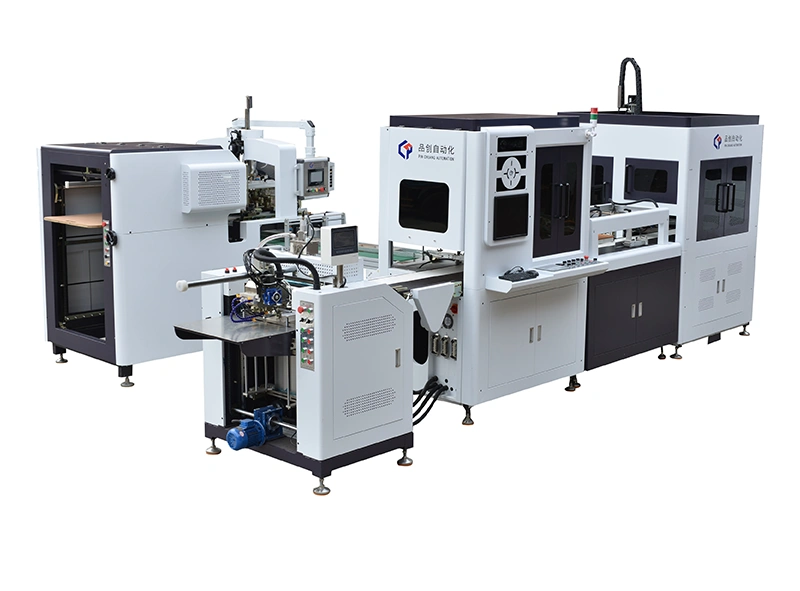
This is where many packaging suppliers turn to automated box forming and wrapping equipment. Instead of relying on human dexterity alone, such systems use servo-driven pressure pads, precise glue application nozzles, and programmable folding arms to transform flat greyboard sheets and printed wrap into finished boxes in under a minute — sometimes as fast as 20 seconds. The machine doesn’t get tired during a third shift. It doesn’t apply too much adhesive on a Monday morning. And it maintains corner consistency across 10,000 units in a way that even the most experienced craftsperson would struggle to match.
If you’re currently evaluating whether to adopt this technology, or if you’ve already decided and are looking for a way to integrate it into your production flow, you can explore automated wrapping and assembly systems that handle formats ranging from a small 80×80 mm chocolate cube box up to a 400×300 mm multi-tier gift chest. The transition doesn’t have to be disruptive; the right configuration actually frees your existing team to focus on value-added tasks like custom ribbon tying or insert design.
Understanding the Production Steps (and Where Machines Help Most)
A typical rigid box — whether it holds chocolate truffles, a bottle of wine, or a luxury watch — consists of a greyboard base and lid, wrapped in decorative paper or leatherette, often with a magnetic closure and an inner tray. The manual process involves:
-
Cutting greyboard to precise dimensions for the base, lid walls, and tray.
-
Gluing and assembling the base tray walls at exact 90° angles.
-
Applying wrap material around the assembled base, trimming corners, and folding over edges.
-
Repeating the process for the lid.
-
Inserting a magnet and stopper, if required, and adding the inner lining.
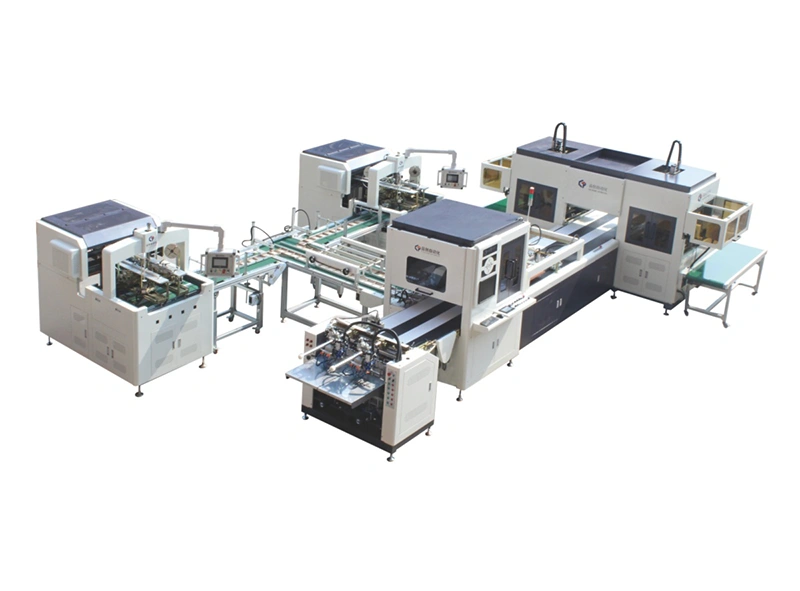
Manual production yields perhaps 8–12 boxes per hour per skilled worker. More importantly, step 3 — the wrapping stage — is where most defects occur: wrinkles, off-center patterns, glue bleed-through, and uneven corners. This is the exact pain point that modern rigid box making machines are designed to eliminate. A rigid box making machine consolidates gluing, positioning, folding, and pressing into a single continuous operation, often with a touchscreen interface that allows format changeovers in less than 10 minutes.
Selecting the Right Production Mode for Your Volume
One of the most common mistakes I see is a small chocolatier buying a fully automatic line capable of 35 boxes per minute, only to find it sits idle 80% of the time. The key is to match your equipment to your real output profile, not your aspirational one. Here’s a practical breakdown:
| Volume Range | Recommended Setup | Typical Payback Period |
| < 5,000 boxes/year | Semi-automatic wrapping jig + manual assembly | Not applicable (tooling) |
| 5,000 – 50,000 boxes/year | Manual gluing with a semi-automated wrapping and pressing station | 12–18 months |
| 50,000 – 200,000 boxes/year | Automated wrapping line with manual feeding | 8–14 months |
| > 200,000 boxes/year | Fully integrated rigid box making machine with auto-feeding, corner pasting, and magnetic closure placement | 6–10 months |
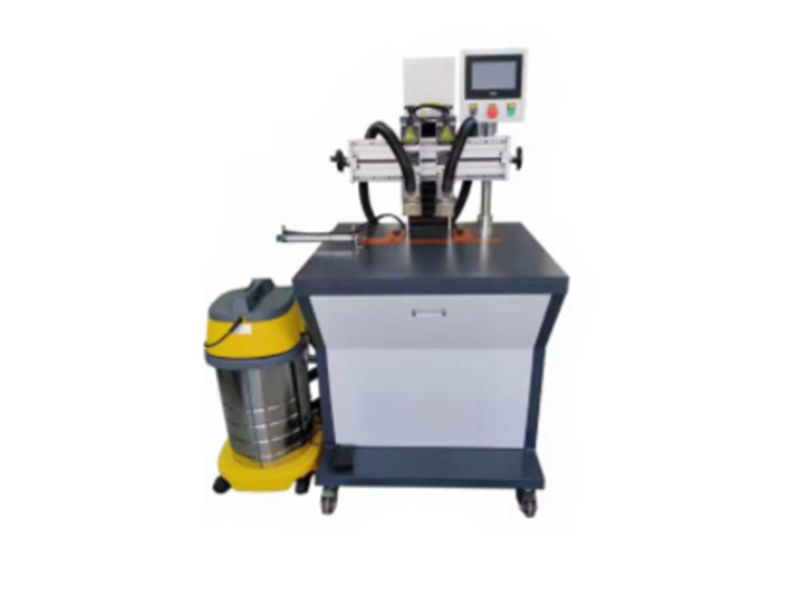
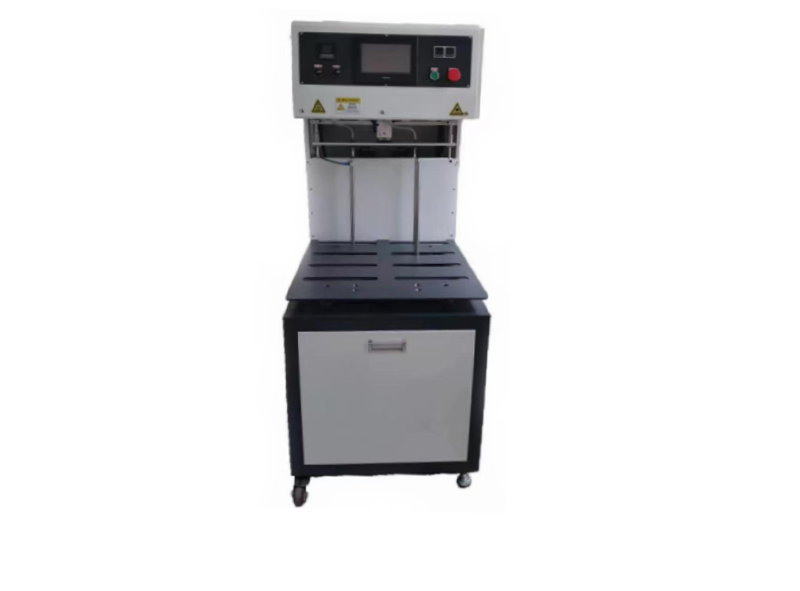
For mid-tier confectioners moving from 20,000 to 80,000 boxes a year, the sweet spot is often an automated wrapping cell that can be fed by one operator. The operator lays the glued greyboard and wrap onto a forming station, and the machine takes care of the folding, pressure application, and ejection. Output rises to 3–4 boxes per minute with corner precision that matches full automation at a fraction of the cost. You can view specific configurations and technical specifications here to see whether a modular approach fits your current floor layout.
Material Considerations That Impact Machine Performance
No amount of automation can compensate for poor material selection. Greyboard density, wrap paper elongation, and adhesive type directly affect the quality of the finished box and the uptime of your machinery. Through conversations with packaging engineers at several European chocolate brands, a few practical thresholds have emerged:
-
Greyboard: 1.5–2.5 mm thickness with a density of 800–1000 g/m². Boards below 700 g/m² tend to warp during the wrapping pressure cycle, causing corner gaps. Higher densities yield cleaner creases.
-
Wrap Paper: 120–170 gsm coated paper or 0.3–0.5 mm bookbinding cloth. The machine’s paper grippers and folding plates must be adjusted to the specific coefficient of friction. Always test a sample batch before committing to a 5-ton paper order.
-
Adhesive: Water-based white glue with a viscosity between 2,500 and 4,000 cps (Brookfield). Too thin and it absorbs into the greyboard before pressing; too thick and it creates visible ridges under the wrap.
One quality manager at a Swiss chocolate manufacturer told me they standardize on 850 g/m² greyboard and 150 gsm matte art paper for all gift boxes, and they’ve reduced machine stoppages by 40% since doing so. The lesson: the machine and the material must be dialed in together. This is why some suppliers offer material testing as part of the pre-installation process, ensuring your exact substrates work within the machine’s tolerance band.
Avoiding the “Automation Trap” in Short-Run Production
Flexibility matters just as much as speed, especially if you produce seasonal collections for Valentine’s Day, Easter, and Christmas — each requiring different box dimensions and artwork. A rigid box making machine that requires 45 minutes of tooling change for a new format can be less efficient than a well-organized manual line if your average batch size is under 300 units. Look for systems with servo-driven format memory that store recipes for up to 50 box sizes, allowing push-button changeovers. Even better, some machines now incorporate visual registration systems that automatically align patterned wrap, eliminating the need to manually adjust the paper feeder when switching between a holly-print Christmas box and a floral spring design.
This operational agility is what separates a machine that collects dust from one that genuinely accelerates your business. When evaluating options, ask the supplier for a real-world changeover demonstration — not just the machine running a single format for an hour. Pay attention to whether the operator needs tools for adjustment or whether everything is tool-less and guided by on-screen prompts.
From Handcraft to Hands-Free: A Transition Path That Preserves Your Brand
A common fear is that moving to automated production will make the boxes look “industrial.” This is a misconception that stems from early-generation equipment. Today’s precision folding and pressing technology can replicate — and often enhance — the handcrafted aesthetic. The small radius on a machine-folded corner, the consistent 2 mm glue line, the perfectly centered logo placement: these details signal quality to a consumer in a way that a slightly crooked wrap cannot.
If your brand story is built on artisanship, you can still tell it authentically. The machine handles the structural assembly; your team adds the ribbon, the hand-signed note, the wax seal. The result is a product that scales without losing soul — and that arrives in the customer’s hands looking exactly the way you designed it, whether it’s the 100th box of the day or the 10,000th.
For brands looking to make this transition incrementally, a sensible approach is to start with your hero product — the best-selling gift box — and automate its production line first. Measure the reduction in labor hours, the drop in rework, and the improvement in customer feedback. Once you have that data, expanding automation across other SKUs becomes a straightforward capital planning decision rather than a leap of faith. If you’d like to explore an entry-level line that can handle your specific box dimensions and materials, you can get a tailored equipment recommendation here.
Long-Term Value Beyond Throughput
Beyond the immediate gains in speed and consistency, automating rigid box assembly reshapes your cost structure in ways that compound. Labor shifts from box making to value-added finishing. Material waste drops by 10–15% thanks to precise glue dosing and wrap positioning. You gain the ability to accept larger orders from corporate clients who require uniform quality across thousands of units — a market segment that many manual workshops simply cannot serve. In one verified case, a packaging service provider in Southeast Asia increased its annual contract value with a multinational confectionery brand by 60% within two years of installing automated rigid box lines, purely because they could now meet the brand’s consistency and capacity requirements.
Not every company needs to make that leap today. But if your growth forecast shows increasing pressure on your packaging team, or if you’re turning away orders because you can’t guarantee delivery timelines, the decision becomes not if, but when. Understanding the capabilities of modern rigid box equipment — and matching them realistically to your production reality — is the first step. The second is testing that understanding against real material samples, in a real production setting, with the support of engineers who specialize in this exact conversion.
Disclaimer: Production figures and payback periods mentioned in this article are approximate and based on industry averages. Actual results depend on material properties, operator training, and facility conditions. Always request a detailed feasibility study from your equipment supplier before making investment decisions.