
 English
 Español
 May 05,2026
The moment a customer slides a velvet ribbon and lifts the lid of a jewelry box, two things happen. First, they judge the product inside. Second—and more critically for your brand—they judge the box that delivered it.
A misaligned hinge, a stubborn magnetic closure, or visible glue residue doesn't just feel cheap. It signals carelessness. And for cosmetic brands selling $50 lipstick sets or jewelry designers offering heirloom pieces, that single negative impression can undo months of branding effort.
Yet many packaging professionals struggle with the same bottlenecks. Here are five real-world mistakes that ruin rigid box quality—and how to eliminate them.
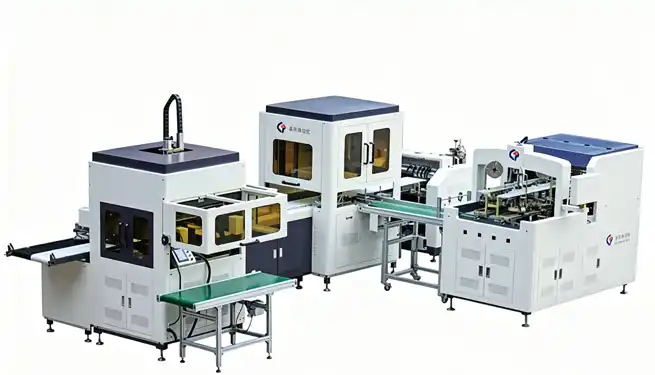
Mistake #1: Underestimating Board Spring-Back
You've probably seen this happen. A box comes off the assembly line looking perfectly square. Twenty-four hours later, the side walls have bowed outward slightly, leaving visible gaps at the seams.
This is "board spring-back"—the natural tendency of thick paperboard (1.5mm to 3mm) to return to its flat state after folding. Standard folding mechanisms that simply crease and bend without adequate dwell time will always struggle here.
The fix: Look for forming stations with adjustable hydraulic or pneumatic pressure that holds the box in its square shape for 2–3 seconds. This "dwell phase" allows the adhesive to reach initial set before the paperboard's internal fibers try to straighten again.
A mid-sized cosmetic contract packer reported reducing post-production warping from 12% to under 2% simply by extending dwell time from 0.5 to 2.5 seconds.
Mistake #2: Using the Wrong Glue Application Method
Jewelry and cosmetic rigid boxes have narrow flanges—often just 12mm to 20mm wide. Industrial glue systems designed for shipping cartons (40mm+ flanges) dump excessive adhesive, leading to three specific failures:
-
Glue bleed: Adhesive squeezes out onto the visible interior fabric
-
Staining: White glue darkens certain paper stocks
-
Slow drying: Excess moisture warps thin liner papers
The fix: A precision application system using slot-die nozzles or spiral spray technology deposits glue only where needed. For high-end cosmetic boxes with dark or textured linings, ask about cold glue systems with viscosity sensors that adjust automatically to room temperature changes.
What industry data shows: According to a 2023 packaging efficiency survey, glue-related rejects account for nearly 28% of total waste in small-to-mid-size rigid box operations—the single largest quality category.
Mistake #3: Ignoring Surface Protection During Feeding
Here's a conversation overheard at a packaging trade show last year:
"We switched to a faster feeder last quarter. Now half our black velvet-finish boxes come out with white scuff marks along the sides."
The culprit? Friction-based feeding systems that drag printed or soft-touch surfaces against metal guides. Dark-colored cosmetic boxes and jewelry sleeves with matte lamination are especially vulnerable.
The fix: A non-marring material handling approach. Look for machines that use:
-
UHMW polyethylene or silicone-coated contact points (self-lubricating and scratch-proof)
-
Pick-and-place grippers that touch only inner flaps or structural edges
-
Belt-driven systems with adjustable tension rather than hard stops
Mistake #4: Treating All Box Sizes the Same
A cosmetic brand launching a holiday collection might need four different box sizes simultaneously:
-
30mm width for lipstick sleeves
-
85mm for eyeshadow palettes
-
110mm for highlighter compacts
-
150mm for gift sets
Traditional industrial equipment handles size changes with wrenches, trained mechanics, and 2–4 hours of downtime. For smaller batches (500–5,000 units), this kills profitability.
The fix: Modular changeover design. The ideal setup allows one operator to swap magazine guides, folding tools, and glue nozzles without specialized tools. Some modern configurations achieve changeovers in under 15 minutes.
If your current workflow loses an entire morning every time you switch SKUs, exploring systems designed for flexibility makes financial sense.
Mistake #5: Chasing Speed Over Consistency
The sales pitch always sounds impressive: "60 cycles per minute!"
But visit any real packaging floor and ask the shift supervisor what matters more. They'll tell you: predictable quality.
A machine running at 60 CPM that jams every 200 boxes—requiring cleanup, re-feeding, and potential tool damage—delivers lower effective output than a machine running steadily at 20 CPM with zero rejects.
The fix: Calculate Effective Output Rate (EOR) instead of peak CPM. Use this simple formula:
EOR = (Peak Speed) × (Uptime Percentage) × (First-Pass Yield)
Real-world example from a jewelry supplier we observed:
-
High-speed line: 50 CPM × 70% uptime × 85% yield = 29.8 good boxes per minute
-
Flexible line: 20 CPM × 95% uptime × 98% yield = 18.6 good boxes per minute
The slower machine was only 37% less productive but required 80% less maintenance attention—freeing operators to handle other tasks.
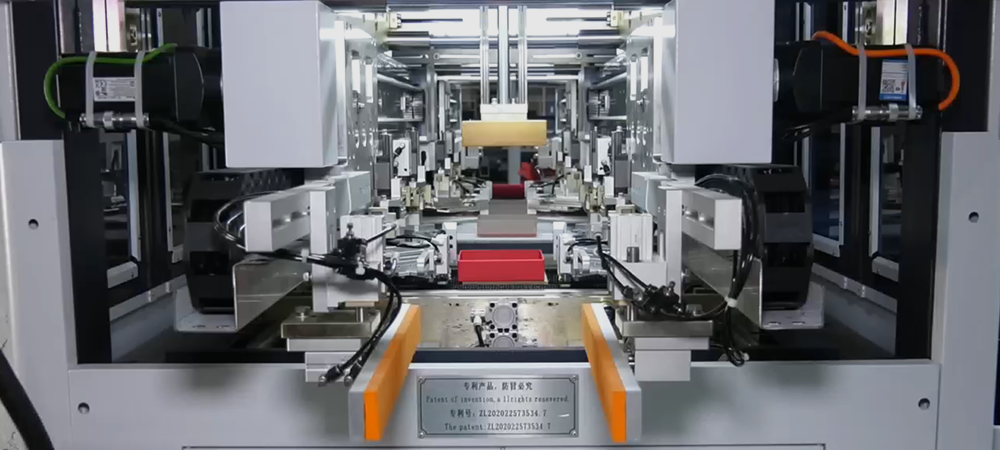
The Hidden Cost of Manual Assembly
Before automation, many jewelry and cosmetic suppliers rely on hand assembly. And for very small volumes (under 500 boxes per month), that works.
But at 2,000+ boxes monthly, hand assembly introduces human fatigue errors:
-
Inconsistent glue pressure (some boxes starved, others flooded)
-
Uneven folding force (resulting in slightly skewed corners)
-
Quality drift (first 100 boxes perfect, last 100 boxes rushed)
One cosmetic contract manufacturer shared their data: manual assembly error rates climbed from 1.5% at the start of a shift to 7.8% after four hours of repetitive folding.
Making the Switch: A Practical Roadmap
If you're currently evaluating automation for jewelry or cosmetic rigid boxes, here's a sequence that works:
Step 1: Document your top three quality rejects by percentage. Be specific. ("Corner gaps" tells you more than "bad boxes.")
Step 2: Sort your SKUs by box dimension. Calculate how many size changeovers you perform weekly.
Step 3: Time your current changeover process from last good box to first good box of the next size.
Step 4: Test candidate equipment using your actual box materials—including your most problematic design.
Step 5: Calculate ROI based on EOR (not peak speed) and realistic uptime.
When to Move Forward
The right time to automate rigid box assembly isn't when your volume explodes. It's when manual inconsistency starts costing customer relationships.
A single returned luxury item due to damaged packaging erases the profit on ten successfully shipped orders. And unlike product formulation or design flaws, packaging defects are entirely preventable with proper equipment.
For businesses specifically serving the jewelry and cosmetic sectors, the equipment landscape offers options between heavy industrial lines (designed for massive runs) and hobby-grade machines (unsuitable for commercial use).
See equipment specifications for jewelry and cosmetic applications.
The middle ground focuses on what actually matters for premium unboxing: clean glue application, square corners that stay square, surface protection during feeding, and changeover speed for varied SKUs.
Final Question for Your Operation
Look at your last 500 rejected boxes. If you could eliminate just two defect types completely, which two would save you the most time and money?
The answer to that question should guide your equipment search more than any brochure specification. Request a sample test using your actual box materials and defect samples.
If you'd like to validate whether your current defect profile matches what flexible automation can solve, the team at PINCHUANG offers material testing using customer-provided box samples. No obligation—just a practical check before any equipment decision.