
 English
 Español
 Aug 07,2026
When comparing the PC-5040A and PC-350B rigid box making machines, the primary differentiator is box size capacity. The PC-5040A handles standard-sized boxes up to L500×W400×H120mm at 26–40 pcs/min, while the PC-350B is optimized for small boxes up to L300×W260×H100mm at 35–50 pcs/min. The choice depends on your typical box dimensions and speed requirements.
This guide breaks down the specifications, capabilities, and ideal applications of each model to help you make an informed decision.
Understanding the Two Models
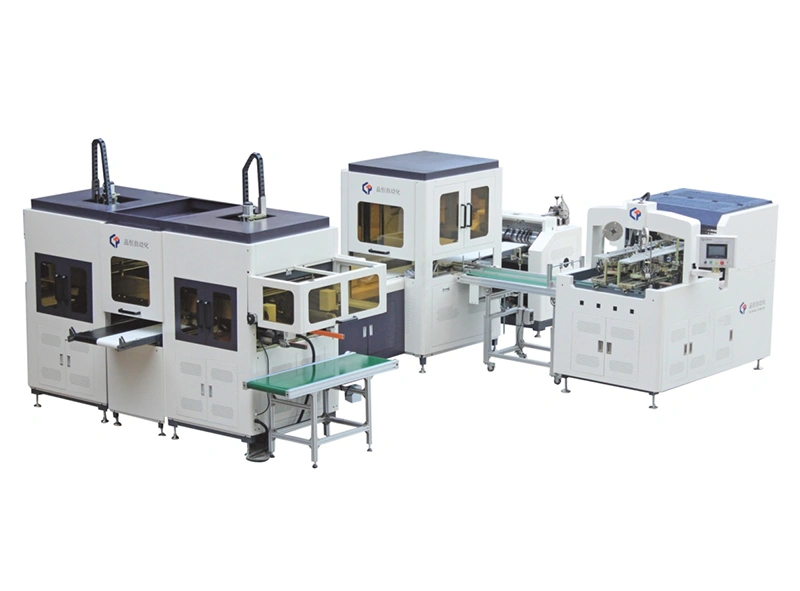
PC-5040A: High-Speed Servo Rigid Box Machine
The PC-5040A is a high-speed servo-driven automatic rigid box making machine designed for stable performance and high production efficiency. It is part of Pinchuang's standard-size rigid box lineup and shares the same maximum box size as the PC-8040A and PC-5040B models.
Key characteristics:
-
Servo-driven system for precision and stability
-
Handles standard box sizes up to L500×W400×H120mm
-
Production speed: 26–40 pcs/min
-
Minimum box size: L65×W65×H15mm
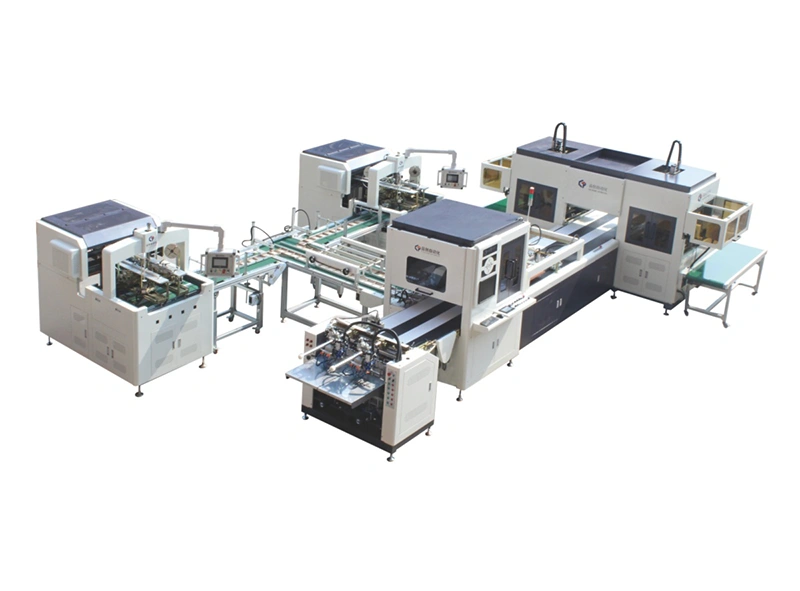
PC-350B: Automatic Rigid Box Machine for Small Boxes
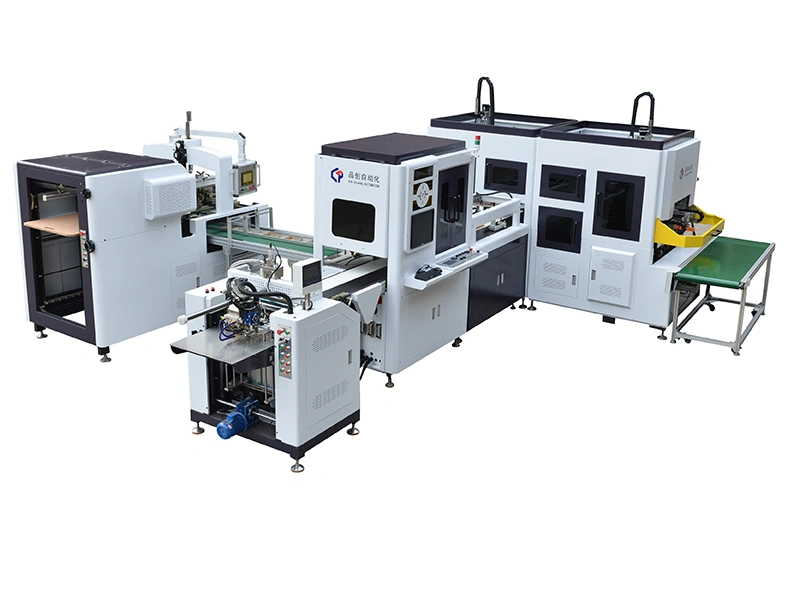
The PC-350B is a high-speed automatic rigid box machine specifically designed for small-size box production. It features a Mitsubishi robot with visual positioning and dual forming stations.
Key characteristics:
-
Mitsubishi robot with visual positioning for precision
-
Dual forming stations working in tandem
-
Optimized for small boxes up to L300×W260×H100mm
-
Production speed: 35–50 pcs/min
-
Minimum box size: L45×W45×H15mm
Side-by-Side Specification Comparison
| Specification | PC-5040A | PC-350B |
| Max. box size | L500×W400×H120mm | L300×W260×H100mm |
| Min. box size | L65×W65×H15mm | L45×W45×H15mm |
| Production speed | 26–40 pcs/min | 35–50 pcs/min |
| Drive system | Servo-driven | Full servo with Mitsubishi robot |
| Positioning | Servo control | Mitsubishi robot + visual positioning |
| Forming stations | Standard configuration | Dual forming stations |
| Paper size range | — | L120–600mm × W80–400mm |
| Paper thickness | — | 80–200 g/m² |
| Gray board thickness | — | 1–3mm |
| Power | — | 17KW / 380V 3Phase |
| Machine weight | — | 5200KG |
| Machine dimensions | — | L6500×W5000×H2400mm |
Key Decision Factors
1. Box Size Requirements
The most critical factor is the maximum box size you need to produce.
-
PC-5040A accommodates boxes up to L500×W400×H120mm, making it suitable for a wide range of rigid box applications including standard gift boxes, electronics packaging, and medium-sized luxury boxes.
-
PC-350B is capped at L300×W260×H100mm, which makes it ideal for smaller products such as jewelry boxes, watch boxes, cosmetic boxes, and small gift boxes.
If your product line includes boxes larger than 300mm in length or width, the PC-5040A is the appropriate choice. If you exclusively produce small-format boxes, the PC-350B offers higher speed and specialized optimization.
2. Production Speed
-
PC-350B achieves 35–50 pcs/min, with some configurations reaching up to 50–60 pcs/min. This makes it one of the faster options for small-box production.
-
PC-5040A runs at 26–40 pcs/min—slightly slower but still high-speed for standard-size boxes.
The speed difference reflects the physical constraints of handling larger materials and box sizes. For high-volume small-box orders, the PC-350B provides a clear throughput advantage.
3. Positioning and Precision
Both models achieve ±0.1mm positioning accuracy. However, they use different approaches:
-
PC-5040A uses servo-driven control for positioning
-
PC-350B incorporates a Mitsubishi robot with visual positioning
The Mitsubishi robot system on the PC-350B provides additional flexibility for precise small-box assembly, while the PC-5040A's servo system delivers stable performance for standard sizes.
4. Typical Applications
| Application | PC-5040A | PC-350B |
| Jewelry boxes | ✓ (small to medium) | ✓✓ (ideal for small) |
| Watch boxes | ✓ | ✓✓ |
| Cosmetic boxes | ✓ | ✓✓ |
| Gift boxes | ✓✓ | ✓ (small only) |
| Electronics boxes | ✓✓ | — |
| Shoe boxes | ✓ | ✓ (small) |
| Tea boxes | ✓ | ✓ |
The PC-350B is specifically positioned for small-size production, making it the preferred choice for jewelry, watch, and cosmetic box manufacturers. The PC-5040A offers broader versatility across gift, electronics, and medium-sized packaging applications.
Decision Checklist
Before choosing between these models, confirm the following:
- Maximum box dimensions — Do your boxes exceed L300×W260×H100mm? If yes, choose PC-5040A.
- Minimum box dimensions — Are your boxes smaller than L65×W65mm? PC-350B can go down to L45×W45mm.
- Target output — Do you need over 40 pcs/min consistently? PC-350B offers higher speed.
- Box variety — Do you produce a mix of small and medium boxes? PC-5040A offers more size flexibility.
- Material specifications — Verify paper thickness (PC-350B: 80–200 g/m²) and gray board thickness (PC-350B: 1–3mm) match your requirements.
- Floor space — PC-350B requires L6500×W5000×H2400mm; confirm your facility can accommodate.
Common Selection Mistakes to Avoid
Mistake 1: Choosing based on speed alone — The PC-350B is faster, but only within its smaller size range. If you need to produce larger boxes, speed is irrelevant.
Mistake 2: Overlooking minimum box size — The PC-5040A has a minimum of L65×W65mm. If your products are smaller than this, the PC-350B (minimum L45×W45mm) is the only viable option.
Mistake 3: Ignoring future product lines — If you plan to expand into larger rigid box formats in the future, the PC-5040A provides more headroom.
Frequently Asked Questions
Q1: Can the PC-350B produce boxes larger than 300mm in length?
No. The PC-350B has a maximum box size of L300×W260×H100mm. For boxes exceeding these dimensions, the PC-5040A or other models in the series would be required.
Q2: Which machine is better for jewelry box production?
Both can produce jewelry boxes, but the PC-350B is specifically optimized for small-size boxes and is generally the better choice for jewelry, watch, and cosmetic box applications.
Q3: How do the positioning systems differ between the two models?
The PC-5040A uses servo-driven control, while the PC-350B incorporates a Mitsubishi robot with visual positioning for enhanced precision. Both achieve ±0.1mm accuracy.
Q4: Is the PC-5040A suitable for small-box production?
Yes, the PC-5040A can produce boxes as small as L65×W65×H15mm. However, if your primary production is small boxes, the PC-350B offers higher speed (35–50 vs 26–40 pcs/min) and is purpose-built for that application.
Q5: What materials are compatible with these machines?
The PC-350B supports paper thickness of 80–200 g/m² and gray board thickness of 1–3mm. Material compatibility for the PC-5040A should be confirmed with the supplier based on your specific requirements.
Q6: Can I see these machines in production before purchasing?
Yes. Pinchuang Automation welcomes factory visits at their 10,000+ m² facility in Dongguan. You can also request a consultation to discuss your specific production requirements.
Conclusion
The choice between the PC-5040A and PC-350B comes down to box size as the primary decision factor, with production speed as the secondary consideration.
-
Choose the PC-5040A if your boxes exceed 300mm in length or width, or if you need flexibility across a range of standard box sizes.
-
Choose the PC-350B if you exclusively produce small-format boxes (under L300×W260×H100mm) and require maximum throughput.
Avoid selecting based on speed alone without verifying that your box dimensions fall within the machine's capacity. Always confirm material specifications—including paper thickness and gray board thickness—with the supplier before finalizing your equipment choice.
For a complete overview of available rigid box making machine configurations, review the full product lineup. To discuss your specific box dimensions and production targets, request a consultation with Pinchuang's engineering team.