
 English
 Español
 May 25,2026
It’s a familiar story. A mid-sized luxury packaging shop lands a large contract for rigid gift boxes. Cash flow is tight, the deadline is brutal, and the quote from the established European supplier makes the accountant flinch. Then an online search turns up a shiny, “fully automatic” rigid former at a third of the price. The specs look identical. Six months later, the machine sits under a dust cover—forming corners that crack, wrapping paper that wrinkles, and wasting more man-hours in adjustment than actual production. The contract is lost, but the bank payment remains.
The appeal of a bargain rigid former is easy to understand. The cost to learn the difference, however, is rarely just financial. Before any investment in forming equipment, understanding why low-cost machines fail—and what rigid former tips actually matter—is essential to safeguarding your brand reputation. If you are currently mapping out the selecting the right rigid box forming solution for a new product line, this read will save you from the most expensive pitfalls.
The Trap Isn’t the Price—It’s the Design Philosophy
A rigid box appears simple: chipboard, wrap, glue, and fold. That simplicity is deceptive. The difference between a box that feels like a luxury unboxing experience and one that feels flimsy comes down to micron-level precision during forming. Most low-cost machines are built around a welded steel frame sourced from a general fabrication shop. Under the repetitive stress of even a single shift, that frame begins to micro-flex. You won’t see the twist, but you’ll measure it in inconsistent wrap tension and ruined corner radii.
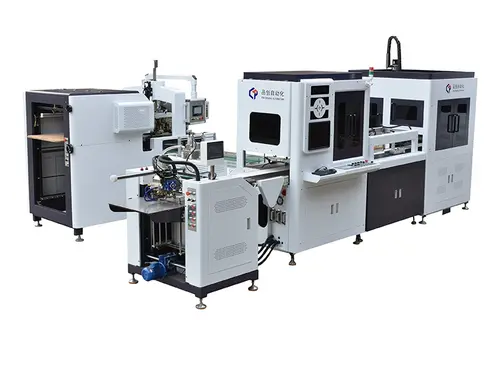
This is where the first rigid former tip emerges: evaluate the frame like you would a precision machine tool, not a furniture rack. Reputable systems use stabilized cast iron or heavily ribbed, stress-relieved weldments that are then precision-machined on five-axis centers. Ask for the flatness tolerance of the folding plates—if the manufacturer can’t provide a number (usually within 0.05 mm), walk away. One packaging manager from a French cosmetics supplier told us that after replacing a bargain machine with a properly engineered alternative, tray corner gaps dropped from a visible 0.3 mm to a consistent 0.08 mm, slashing customer returns by over 70%. The frame alone accounted for most of that gain.
The Motion System: Servos Are Not Created Equal
The second place low-cost builders cut is the motion control system. A brochure might boast “servo-driven,” but open the electrical cabinet and you may find cloned drives paired with undersized motors that run hot and lose synchronization under acceleration. The result is the bane of every rigid box maker: “ghost shifting”—where glue flaps drift out of alignment by a fraction of a millimeter run after run, forcing the operator to pause and manually tweak offsets.
A machine that actually earns its footprint on your floor uses a synchronized multi-axis motion bus with genuine medium-inertia servos sized for at least 150% of the peak torque demand during corner-wrapping. The tip here: request the inertia ratio calculation for the main forming axes. A well-designed direct-drive or timing-belt reduction will typically stay below a 5:1 inertia mismatch. Anything higher means the motor will constantly hunt for position, wearing out bearings and driving up scrap. In the market for high-precision rigid box forming equipment, always verify whether the servo tuning can be exported for remote diagnostics—this single feature prevents days of downtime when a parameter drifts on a Friday night.
Glue Control: The Hidden Profit Killer
Ask any operator about their nightmares, and cold glue stringing or hot-melt overspray will top the list. Low-cost formers often use simple time-pressure glue controllers that pulse adhesive regardless of actual machine speed. The result is over-gluing during slow-downs and under-gluing during ramp-ups. That might sound minor, but with adhesive costs ranging from 8to8to25 per kilo for specialty box glues, a 15% waste rate across three shifts can silently evaporate your margin.
Advanced systems switch to closed-loop, speed-following dispensing that meters glue precisely to the gram per meter of substrate, even when the line accelerates for small-format boxes. Combine this with a nozzle that retracts and cleans itself during a substrate gap, and you eliminate both waste and the daily 20-minute cleaning ritual. Professional solutions increasingly rely on such features, and you can explore advanced forming technology that integrates these closed-loop controls as standard.
Quick-Change Reality vs. Marketing Claims
Another low-cost trap is the “5-minute changeover” promise. Sure, some machines can swap from a square box to a book-style cover in five minutes—if you have two technicians, all the tooling pre-set, and don’t count the 15 minutes of fine-tuning afterward that never appear in the demo video. Real-world quick change depends on three design elements: digitized tooling slots that remember position via RFID, motorized height and width adjustments that move simultaneously rather than sequentially, and recipe management that downloads tension, glue, and pressure parameters for a specific SKU.
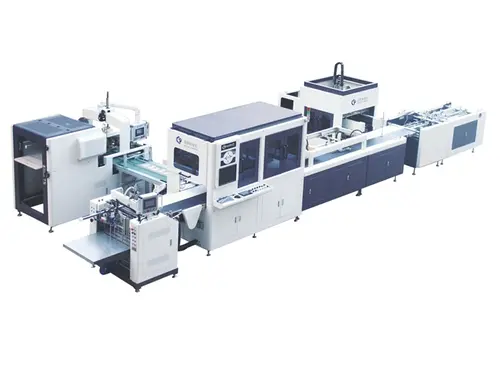
A practical rigid former tip: time a complete changeover yourself during a live demonstration, from the last good box of job A to the first good box of job B, without the vendor touching the screen. Anything above ten minutes genuine downtime per change, and you’ll struggle to profitably serve the increasing demand for short-run, personalized luxury boxes.
Where Precision Meets Production Reality
We haven’t even touched on the vacuum system, where undersized pumps fail to hold uncoated paperboard reliably, or on the skipping-blade wrap station that sacrifices a neat tucked corner for cycle speed. Collectively, these design choices define whether a rigid box making machine is a productive asset or a persistent bottleneck. It’s telling that after decades of refining these subsystems, a single rigid box making machine from a serious engineering brand often retains 60% of its value after five years, while a budget alternative is typically scrapped or abandoned in the corner.
The broader trend in the industry reinforces this: luxury brands are tightening their quality requirements, asking for fully sealed four-corner boxes with removable lids that hold a perfect rectangular silhouette even after shipping. This is driven by the unboxing video culture and the premium expectations of e-commerce customers. Meeting those demands requires not just a machine, but a forming ecosystem that anticipates the substrate’s behavior. That brings us to the ultimate rigid box making machine consideration—does the supplier treat forming as a standalone act, or as an integrated system of frame, motion, glue, and control logic working in harmony?
Avoiding the Trap for Good
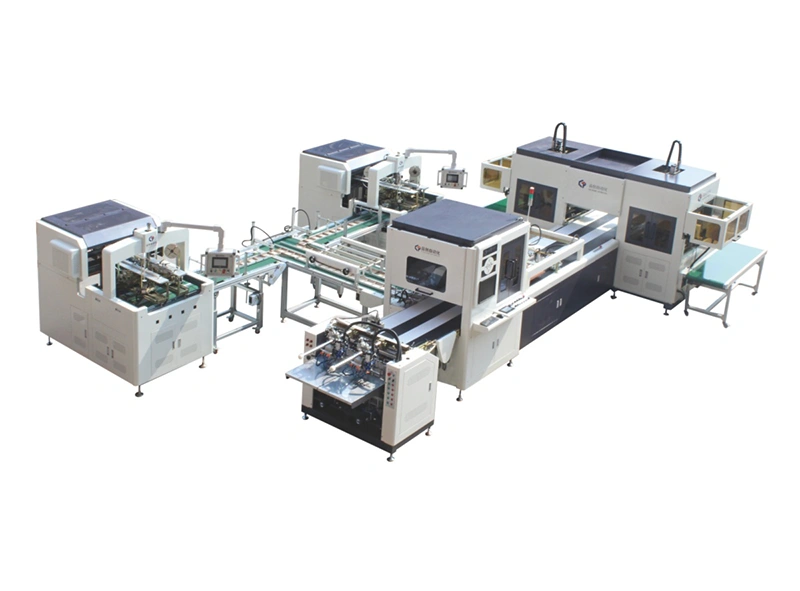
Armed with these tips, you can begin filtering suppliers not by brochure color but by engineering depth. Request a thermal stability report for the frame, an inertia ratio simulation, a glue-usage guarantee, and a recorded real-time changeover. Where a provider can offer this level of transparency, they are likely to stand behind their equipment long after installation. If you’d rather skip the lengthy qualification process and move directly to a platform already built around these principles, you might want to check out PINCHUANG’s automated box making systems. Designed from the cast frame up for precision luxury packaging, these systems reflect the very lessons learned from thousands of production lines where pennies saved on the purchase price became dollars lost in the finish.
Ultimately, the true cost of a rigid former isn’t on the invoice—it’s the cost per perfect box, year after year. Learning to calculate that before you buy is the best rigid former tip anyone can give you.
Disclaimer: This article provides general information based on industry experience and should not be taken as specific engineering advice. Performance data referenced from customer feedback and public case studies. All machine specifications should be verified directly with the manufacturer.