
 English
 Español
 Jun 02,2026
It’s a Monday morning, and the third job of the shift is already behind schedule. The crew is still swapping out forming plates, adjusting glue nozzles, and re-timing the conveyor after a switch from a telescopic lid to a clamshell book-style box. By the time everything is dialled in, 90 minutes have vanished — and so has the margin on a short-run order. If this scene feels familiar, you are not alone. In high-mix gift packaging, luxury spirits, and electronics, the ability to pivot between jobs quickly often matters more than top speed. The good news? A quiet revolution in line architecture and digital controls is making sub-15-minute changeovers a daily reality.
Why Rigid Box Lines Get Stuck During Changeover
The root cause is rarely a single component. Instead, it hides in three interlocking areas:
1. Mechanical dependencies. On many traditional lines, a change in box height forces manual adjustment of a dozen cam followers, vacuum cup positions, and glue strip bars — each with its own locknut and gauge block. One missed setting and corner gaps appear, lids sit proud, or the wrap wrinkles.
2. Absence of digital recipe management. Operators rely on pen-and-paper setup sheets or, worse, personal memory. When Abdul is on leave, the telescopic Lid 180×120×50 recipe leaves with him. That means re-inventing the wheel every few weeks.
3. Long cleaning and adhesive transition. Switching from hot melt to cold PVA, or from a dark paper wrap to a bright white one, often demands a full glue system purge and scraper blade replacement. Without quick-release pot systems, the chemical clock dictates the production pause, not the process itself.
According to the Society of Manufacturing Engineers’ SMED methodology, internal changeover activities — those that require the line to be stopped — should be converted to external tasks performed offline. In rigid box production, the gap between theory and reality has historically been wide because tooling was heavy, bespoke, and mechanically interlocked. That is changing rapidly.
The Five Lever Points That Cut Rigid Box Changeover Time
When we dissect lines that consistently achieve sub-20-minute transitions between wildly different box formats, five common elements appear. They apply regardless of whether you are producing a premium smartphone gift set or a magnetic closure wallet box.
Lever 1: Modular, Cartridge-Style Forming Units
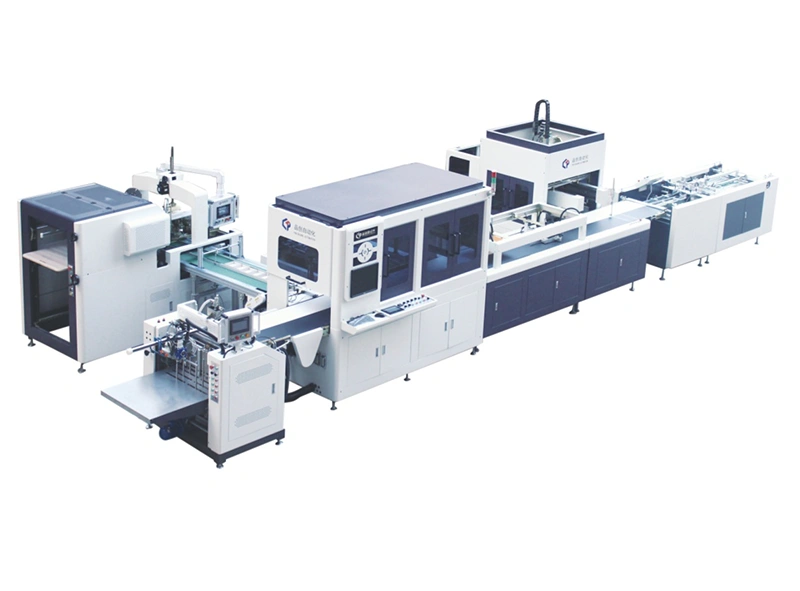
Instead of changing individual fingers and plates on the machine, some newer designs accept whole forming cartridges that are pre-set offline. An operator wheels a cart containing the cavity block, corner tuckers, and pressing plate — all pre-aligned on a common subframe — and docks it into the station within 60 seconds. Because the cartridge uses locating pins and quick-clamps, no measurement or try-out run is needed. The concept is borrowed from automotive press tooling, where single-minute exchange of dies is now standard.
Lever 2: Servo-Driven Axis with Stored Electronic Recipes
Each motion — paper feeder stroke, glue pattern length, spotting needle position, lid pressure dwell — becomes a numeric parameter, not a spanner turn. When a recipe is recalled from the HMI, all axes drive to the target positions simultaneously. Because servo motors provide closed-loop feedback, the control system verifies that each axis has reached its intended position before releasing the start interlock. Some automation architectures even allow operators to fine-tune a setting during production and save the tweak back to the recipe, closing the continuous improvement loop without paperwork.
Lever 3: Quick-Purge Glue System Design
The glue circuit itself often dictates the minimum changeover window. Engineers have addressed this by shrinking the volume of heated or pressurised adhesive between the tank and the application head. Manifolds with dead-space-free passages and integrated flush ports allow a full material swap — from hot melt to water-based — in under 10 minutes. Combined with self-cleaning nozzles that pulse-clean during the last cycle of a job, the sticky bottleneck disappears. Research published by the Adhesive and Sealant Council indicates that application-side downtime can be reduced by up to 70% with properly designed short-residence-time systems.
Lever 4: Vision-Guided Auto-Correction
Even with perfect mechanical repeatability, material behaviour varies — paper batch humidity, slight curl, or board caliper drift. High-end machines now incorporate a single camera near the wrapping station that inspects the first two boxes of a new job and automatically corrects the overlap length, centering offset, or glue placement. Instead of a trial-and-error phase consuming 10–15 boxes, the line is in spec by box three. A packaging engineer at a well-known French perfume house mentioned in a recent industry white paper that this feature alone saved them 22 hours of changeover-related rework per month across two shifts.
Lever 5: Separating Internal and External Tasks at the Software Level
The most overlooked lever is the operator interface. A smart job scheduler can queue the next recipe while the current one is running, displaying a checklist of external prep tasks on a secondary screen: “Pre-heat cartridge to 45 °C,” “Place paper pallet at feeder,” “Verify glue type.” By the time the last box of the run exits, everything for the next job is staged. This SMED discipline is now enforced by the machine logic, not by a supervisor’s memory.
Where This Leaves the High-Mix Producer
For a contract packaging supplier juggling 15–30 different box references per week, these five levers can move the needle from “barely profitable short runs” to a viable quick-turn business. A typical before-and-after picture looks like this:
| Parameter | Traditional Line | Modern Flexible Line |
| Average changeover time | 45–90 minutes | 12–18 minutes |
| Boxes wasted during setup | 8–20 per changeover | 0–3 per changeover |
| Operator skill dependence | High (tacit knowledge) | Medium (guided workflow) |
| Feasibility of <500-box orders | Often refused | Routinely accepted |
| Recipe storage | Paper logbook | Digital, versioned, remote backup |
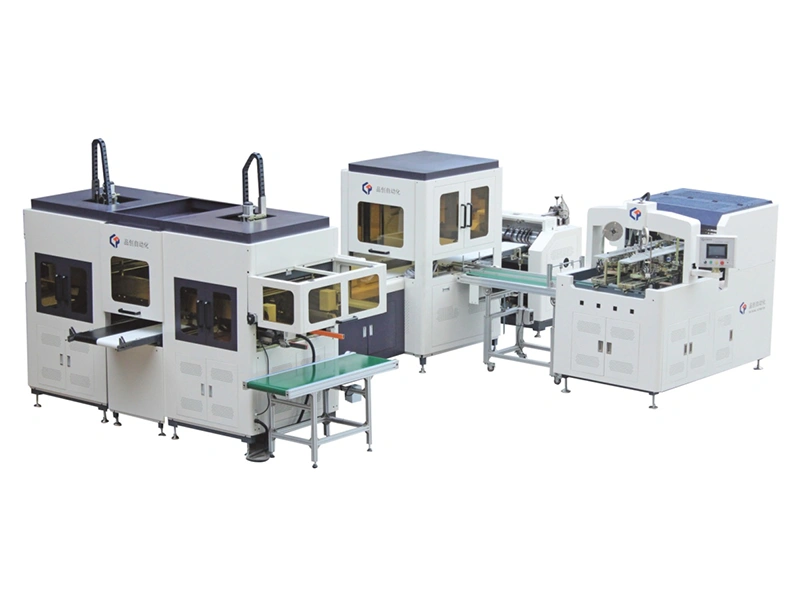
When you can turn around a new box format in less time than it takes to conduct a coffee break huddle, the commercial implications multiply: you can bid on rush orders, accept more personalisation projects, and reduce finished goods inventory because make-to-order becomes faster.
A Pragmatic Word on Incremental Upgrades
Not every plant is in a position to replace an entire line at once. The beauty of the modular philosophy is that it can be adopted stepwise. Start by digitising the recipes on your existing machine — even if it requires manual mechanical adjustments, a structured recipe screen with photos and setup values slashes ambiguity. Next, retrofit a quick-change glue manifold. Then, consider one or more modular forming stations that handle the most frequent size family in your mix. This modular upgrade path for rigid box forming can spread the capital cost while delivering measurable time savings quarter by quarter.
Moving from mechanical-only stop dogs to servo-controlled positioning may sound like a daunting leap, but the control technology has matured to the point where retrofits are increasingly plug-and-play. A production survey conducted by a Chinese packaging machinery association revealed that manufacturers who adopted at least two of the five levers — most commonly electronic recipes and quick-change cartridges — reported a 38% average reduction in total changeover-related downtime within six months.
If you would like to see how these principles translate into actual machine specifications, you can explore detailed configurations here. A carefully designed line makes the difference between fighting for marginal gains and rethinking the production flow entirely.
Getting the Human Element Right
Technology alone cannot deliver a 12-minute changeover. The best results come when the machine’s design nudges the crew into best practices without requiring heroics. When a recipe recall sets every axis, the operator transforms from a mechanic into a process verifier. The cognitive load drops. Training time for new staff shrinks. One plant manager recounted that after switching to a forming system with stored recipes and cartridge-style tooling, his temporary workers were producing saleable boxes on their second day — something that used to require a two-week mentorship.
This shift also builds resilience. When a key technician retires or a wave of absenteeism hits, the factory does not grind to a halt because the setup knowledge no longer resides exclusively in human memory. It lives in the machine, version-controlled and backed up.
A Quiet Word on Automation Expectations
No machine, however clever, completely eliminates changeover time. The goal is to compress it to the point where it ceases to be the dominant constraint. For a business producing luxury rigid boxes — whether for a flagship smartphone launch, a limited-edition cognac gift pack, or a holiday beauty calendar — the real objective is agility. Agility to say “yes” to a 200-box personalised run without flinching. Agility to move a job forward when a customer changes a die-cut shape on Thursday afternoon for a Friday shipment.
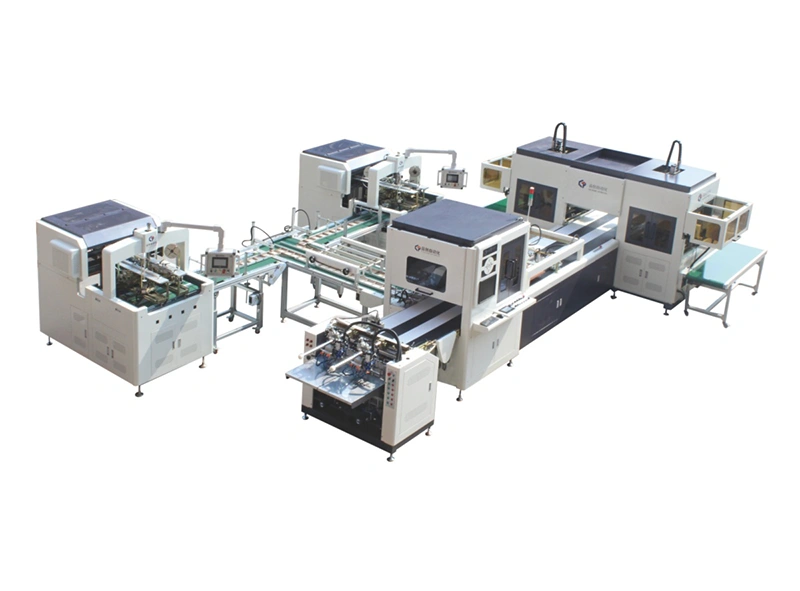
A purpose-built machine that can fold, wrap, and press a diverse family of box formats without heavy re-tooling is no longer an R&D concept. The fundamentals — cartridge tooling, digital recipes, low-residence glue systems — are proven on factory floors. If slow changeovers are still the loudest complaint at your morning meeting, the fix may be less intimidating than you think. For those ready to take a closer look, PinChuang’s flexible rigid box automation solutions provide a practical entry point built around exactly these design levers.
Disclaimer: The performance figures and case examples cited are drawn from publicly available industry reports, white papers, and general engineering principles (including SMED methodology). Individual results depend on specific box formats, materials, and production environments. No confidential customer data has been disclosed.