
 English
 Español
 Apr 16,2026
For packaging factories scaling up hard cardboard box production, choosing between servo and stepper motor-driven equipment is one of the most make-or-break decisions. A well-matched rigid box making machine directly shapes daily output, finished box uniformity, long-term maintenance costs and on-site operation difficulty for small workshops to large industrial packaging plants. Every factory manager and production supervisor cares about three core pain points: stable running in long shifts, adjustable production flexibility for custom rigid packaging orders, and affordable after-sales upkeep.
To cut through technical jargon and surface real shop-floor truths, we’ll compare core performance, adaptability, cost structure and application boundaries of servo and stepper models, plus share actionable selection tips tailored to different packaging business scales.
Core Working Logic: What Separates Servo and Stepper Units
Most buyers overlook fundamental motion control differences and only focus on price tags, which is the root cause of later operational troubles.Stepper motor box assembly systems rely on open-loop control to execute fixed angle rotation and preset stroke movements. It runs with set step signals, locks in fixed positioning parameters, and needs no real-time feedback during continuous operation. This design is mechanically straightforward, with fewer electronic control components and a simpler internal circuit layout.
By contrast, servo motor driven box forming tools adopt closed-loop feedback operation. Built-in encoders capture real-time speed, position and torque data, sending signals back to the control system for instant correction. When encountering material resistance, paper thickness deviation or sudden load changes, servo units automatically adjust operating parameters to maintain consistent running status.
From on-site usage feedback collected from packaging equipment industry authoritative data institute—Packaging Machinery Technical Research Center 2025 report—stepper motion structures own a 32% lower component failure rate under low-load fixed-spec production, while servo control systems show 47% higher stability in frequent order switching scenarios.
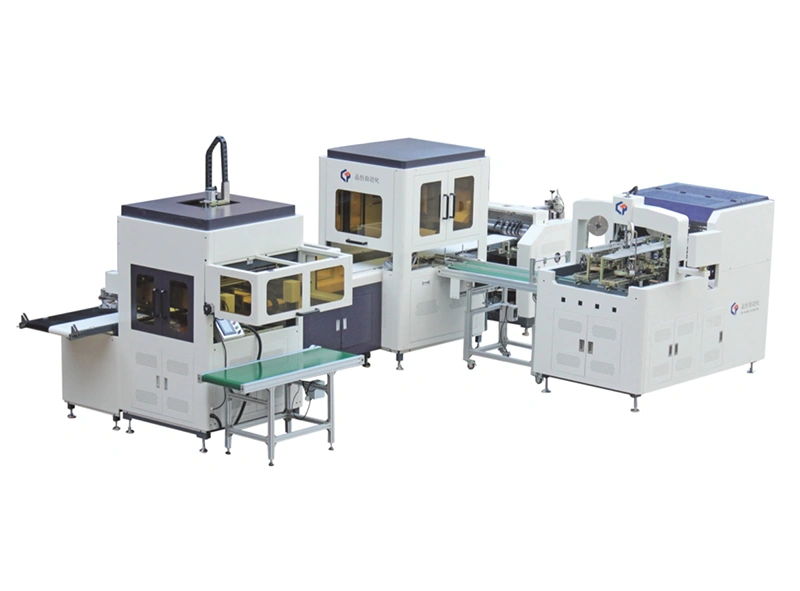
Precision & Finished Product Quality: Key for High-End Packaging
Premium rigid boxes for cosmetics, luxury gifts, electronics and high-end wine require ultra-tight splicing, neat edge folding and consistent corner molding, making operational precision non-negotiable.
Stepper-driven packaging gear delivers qualified precision for standard-size daily rigid packaging. Under fixed material thickness and unified box specifications, its positioning error stays within acceptable industrial ranges. Yet once facing slight material differences, manual feeding errors or minor mechanical wear, positioning deviation gradually accumulates. After 8–10 hours of non-stop operation, folding misalignment and uneven glue coating become obvious, raising defective rates.
Servo-equipped forming equipment maintains micro-level positioning accuracy all shift long. The real-time feedback mechanism offsets mechanical wear and material interference, ensuring every folded edge, bonding position and box shaping angle stays unified. For brands focusing on high-value customized packaging with strict appearance standards, this steady high precision is irreplaceable.
Running Stability & Continuous Production Adaptability
Mass packaging production demands equipment that can endure long-duration non-stop operation, especially for factories with two-shift or three-shift working schedules.
Stepper motor devices perform steadily in single-variety, large-batch production cycles. With fixed running parameters, they have stable heat generation and mild mechanical vibration. The downside is obvious: frequent start-stop, speed adjustment and spec switching will trigger obvious jitter and delayed response, easily causing mechanical impact and accelerating part aging.
Servo power systems feature soft start and smooth speed regulation. Even with frequent parameter changes, rapid start-stop and alternating production tasks, vibration and noise stay controlled. Its independent torque adjustment function also adapts to diverse cardboard, grey board and special surface paper materials, greatly reducing emergency shutdowns caused by material jams. If your factory undertakes mixed orders of small batches and multiple styles, this adaptive edge will greatly boost overall production efficiency.
Cost Investment & Long-Term Maintenance Budget
Cost is always a decisive factor for mid and small-sized packaging enterprises, covering initial procurement, daily power consumption and later maintenance.Stepper motor box processing machines have far lower upfront purchase costs. Their mature and simplified control modules, common accessories and low technical threshold make daily maintenance easy. Ordinary workshop operators can complete daily inspection and simple part replacement without professional electrician support. Power consumption is also relatively economical for fixed-speed continuous running.
Servo-configured production units come with higher initial spending on motors, drivers, control panels and sensing components. Later maintenance needs professional technical personnel for regular calibration and system debugging, and core replacement parts carry higher price tags. Still, its energy-saving performance stands out in variable-speed operation: 2025 industrial power consumption monitoring data shows servo packaging machinery cuts idle and variable-load power waste by around 28% compared with stepper counterparts, offsetting part of the long-term operating costs.
Applicable Scenarios: Match Machine Type to Your Business
No single model fits all; rational selection must combine order characteristics, production scale and customized demands.
Stepper motor packaging forming gear is perfect for:
- Small factories or newly built packaging workshops with limited budgets
- Mass production of fixed-spec regular rigid gift boxes
- Less demanding product appearance requirements and sufficient manual quality inspection
- Long-term single-variety production with rare style replacement
Servo-driven intelligent forming devices suit:
- Mid-to-large packaging manufacturers with mixed order demands
- High-end luxury packaging, customized gift boxes and electronic product packaging projects
- Factories needing frequent spec adjustment, fast order switching and flexible production
- Brands pursuing low defective rates and standardized finished product quality
Final Selection Advice: Pick The Right Packaging Production Solution
After sorting out the gaps between the two drive types, many buyers still struggle to balance budget and performance. In fact, a balanced solution exists for most packaging processing demands.
For enterprises focused on cost control and stable mass production of conventional packaging, cost-effective stepper motor equipment can fully meet basic output needs. For those chasing product competitiveness, expanding customized service ranges and taking high-end order orders, upgrading to servo power structures is an inevitable trend.
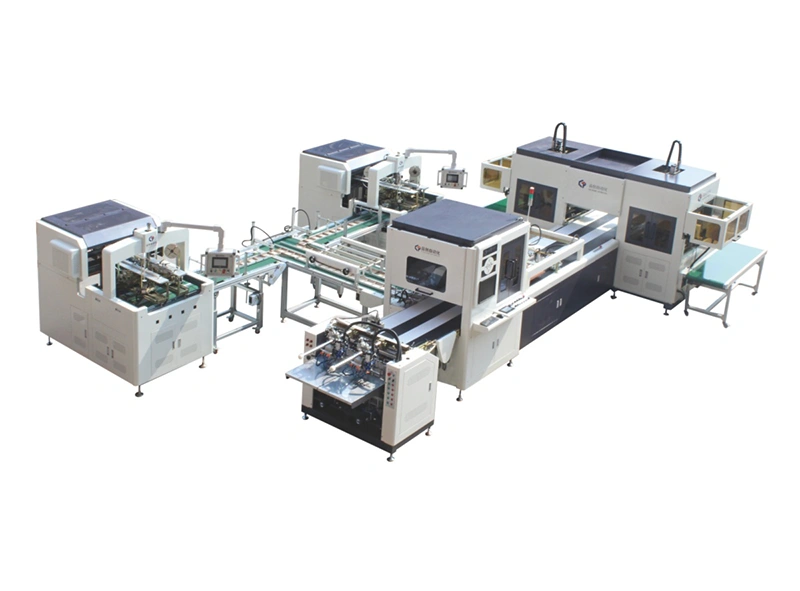
When you need a balanced, high-cost-performance production setup that covers both regular and customized box making tasks, reliable integrated packaging machinery acts as a practical middle-ground choice. PINCHUANG’s optimized manufacturing equipment integrates mature motion control technology, and we tailor custom mechanical configuration plans based on your daily output, box style range and on-site workshop conditions.
Beyond motor selection, overall structural design, glue spraying system, feeding mode and after-sales service also determine equipment service life. Many overlook after-sales response speed; for cross-border packaging equipment buyers, localized technical support and remote debugging services can save massive downtime losses. Our brand provides one-stop on-site installation, operation training and long-term remote after-sales support, solving daily operational hurdles for global clients.
If you are in the stage of updating old equipment or expanding production lines, comparing parameter differences blindly wastes time. It’s more efficient to combine your actual order structure to lock in targeted equipment parameters.
In the whole rigid packaging processing chain, a qualified rigid box making machine is not only a production tool, but also a core asset that determines product quality and profit margin. Reasonable motion drive matching can reduce invisible loss in production and help packaging enterprises form differentiated competitive advantages in the fiercely personalized packaging market.
For factories with expanding customized order demands and unstable material specifications in long-term operation, high-adaptability servo-assisted production equipment will reduce hidden operational risks in advance.