
 English
 Español
 Apr 21,2026
For packaging factories and brand manufacturers stuck in small-batch rigid box production bottlenecks, the Automatic Double Rigid Box Making Machine delivers tangible improvements to daily production efficiency, size consistency and operational cost control. Many mid-sized packaging operators face recurring headaches: tiny box structure deformation, slow manual bonding, inconsistent edge wrapping and limited floor space for large-scale machinery. According to 2025 packaging automation industry data released by the Global Packaging Machinery Association, nearly 62% of small and medium rigid box producers list compact production limitations and unstable small-spec box molding as their top operational pain points. This article breaks down those common hurdles and shares practical, custom-built rigid box line strategies tailored for small-box manufacturing scenarios.
Hidden Pain Points in Traditional Small Rigid Box Production
Small rigid boxes are widely adopted in high-end cosmetics, luxury jewelry, portable electronic accessories and premium gift packaging, yet their compact structure brings unique manufacturing challenges that standard general packaging equipment cannot fully resolve. Most traditional production modes still rely on semi-manual assembly or outdated single-function box forming devices, which create cascading issues for long-term operation.
First comes size precision deviation. Miniature box bodies require ultra-tight tolerance control, and manual folding or old mechanical extrusion often leads to tilted corners, uneven side panels and loose inner lining bonding. Second, labor dependency stays high. Skilled workers for fine box wrapping are in short supply globally, and repeated manual work raises error rates while pushing up hourly labor expenses year by year. Third, limited workshop space utilization becomes a key restriction for urban-based processing plants, where bulky multi-station equipment simply cannot fit into compact factory layouts.
Beyond production quality and space issues, material waste is another overlooked expense. Misaligned gluing, incorrect board cutting and repeated rework for defective small boxes will gradually erode profit margins, especially for low-margin mass customized small packaging orders. Many factory owners attempt to adjust ordinary box making devices to adapt to small-spec products, but forced modification usually shortens equipment service life and increases daily maintenance frequency.
Why General Packaging Equipment Fails Small-Spec Box Demands
A common misunderstanding among packaging procurement teams is that universal carton or rigid box machinery can cover all size ranges, from large gift boxes to mini packaging units. In reality, mechanical transmission, positioning fixtures and gluing systems are designed with fixed size thresholds, and small box processing demands refined parameter adjustment that general models lack.
Standard rigid box equipment usually focuses on medium and large box forming, with wider positioning gaps and thicker pressing components. When switching to small-size workpieces, those loose structural designs cause frequent material slipping and positioning offsets. Meanwhile, high-speed running modes for large boxes will generate excessive vibration, which distorts the fragile paperboard and hardboard materials used in lightweight small rigid boxes.
Low flexible production adaptability is another obvious flaw of conventional machinery. Modern brand orders feature diversified small-batch customization, requiring frequent switching of box shapes, surface materials and internal structures. Inflexible traditional equipment needs long downtime for mold replacement and parameter resetting, greatly delaying order delivery cycles. For enterprises balancing bulk orders and personalized small-batch customization, a single traditional machine setup can no longer meet dual-scenario production needs.
Customized Rigid Box Line: Targeted Optimization for Small Box Scenarios
To counter the above industry-wide drawbacks, forward-thinking automation brands like PINCHUANG have redefined small-box manufacturing logic through modular rigid box line design, rather than simply shrinking large equipment structures. The core optimization idea is to refine key processing units, reduce unnecessary mechanical occupation, and strengthen precise control for miniature workpiece processing.
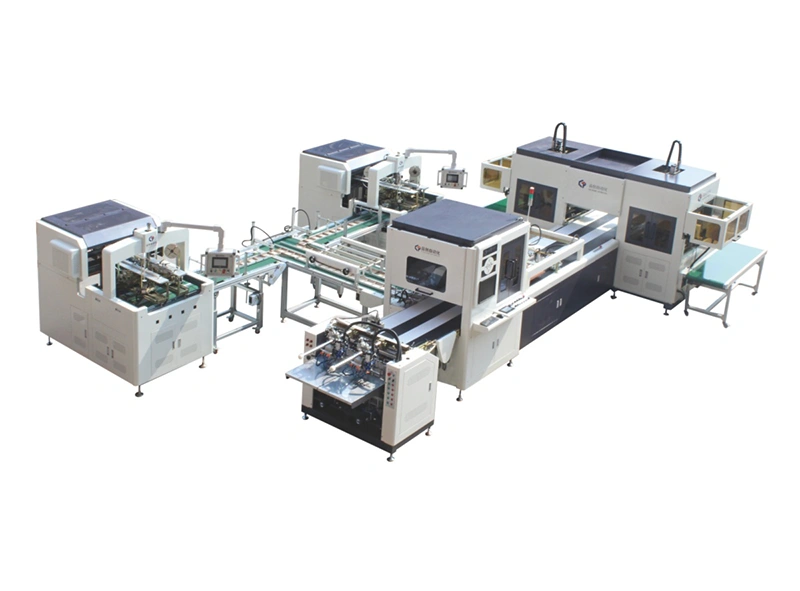
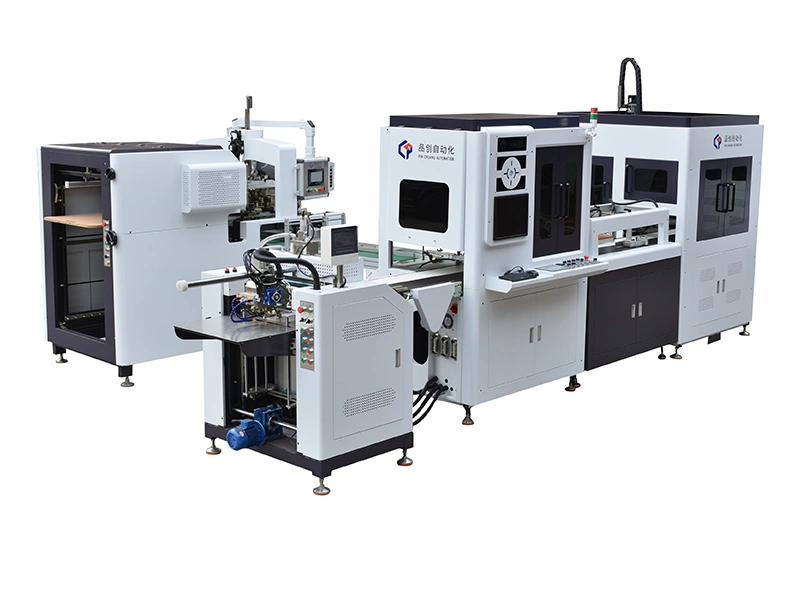
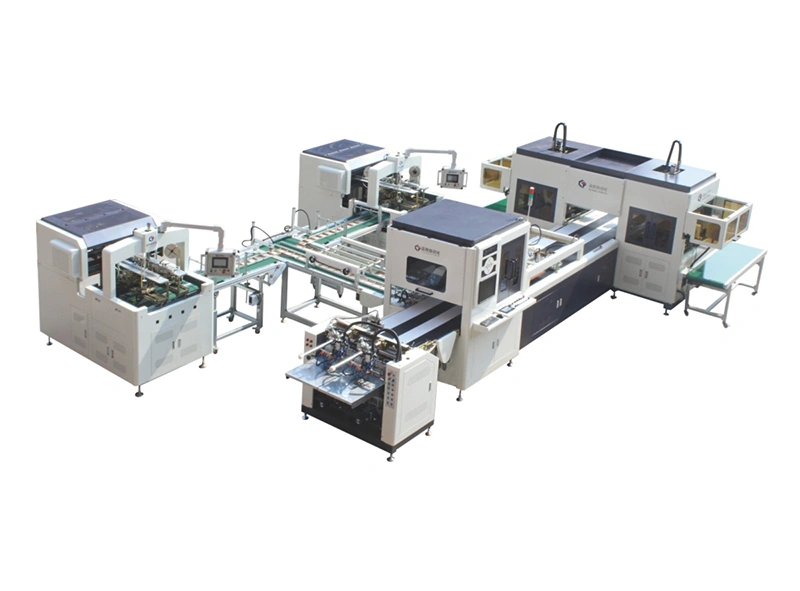
In terms of spatial design, the customized small-box rigid box production line adopts a compact integrated layout, merging gluing, board positioning, corner folding and box forming into a streamlined structure. This design cuts overall floor occupation by nearly 35% compared with traditional split-type box making lines, perfectly matching small and medium processing workshop layout demands and lease-limited factory spaces.
For core processing details, the upgraded micro-positioning sensor group corrects workpiece placement in real time, while the quantitative micro-gluing system avoids glue overflow or insufficient bonding on tiny box edges. Adjustable soft pressing components replace rigid extrusion parts, protecting thin special paper, coated fabrics and personalized decorative surfaces from scratching or deformation during high-speed operation.
What truly sets a targeted rigid box line apart is its customizable service logic. Different industries have distinct small-box requirements: cosmetic packaging needs waterproof and wrinkle-resistant forming, jewelry boxes require ultra-flawless corner processing, and electronic accessory boxes focus on compression resistance and structural firmness. The brand provides one-stop tailored adjustment, including custom fixture sizes, multi-material compatible gluing modules and human-machine operation panel localization optimization, allowing each production line to fit the actual order characteristics of the buyer’s enterprise.
Automated Solution Comparison: Upgrade Small Box Production Efficiency
When sorting out feasible upgrading paths for small rigid box production, enterprises mainly have three options: continue semi-manual operation, retrofit old general box equipment, or deploy a professional automated rigid box production system including the Automatic Double Rigid Box Making Machine. Each solution has clear differences in input cost, output quality and long-term operational benefits.
Semi-manual production features low early procurement costs but faces unsolvable drawbacks: unstable product consistency, slow daily output, high labor turnover risks and uncontrollable material waste. It is only suitable for ultra-small-batch handmade customized orders, and cannot support scalable business expansion. Retrofitting old equipment seems cost-effective in the short term, yet modified parts lack overall coordination, leading to frequent failures, shortened service life and hidden safety hazards, with no obvious improvement in small box yield.
In contrast, a dedicated automated rigid box line brings comprehensive steady upgrades. With integrated precise forming and continuous operation, it stabilizes small box yield above 98%, greatly reducing rework and material loss. The modular structure supports fast mold switching, shortening order changeover time from hours to tens of minutes, which is critical for businesses undertaking mixed customized orders. Meanwhile, unified automated operation reduces reliance on skilled workers, realizing standardized production and stable delivery cycles all year round.
Long-Term Value of Choosing PINCHUANG Rigid Box Line
Compliant with EEAT industry operation standards, PINCHUANG has focused on packaging automation R&D and manufacturing for years, with on-site after-sales teams and mature industry application experience in high-end rigid box manufacturing. Beyond equipment supply, the brand provides full-cycle supporting services, including on-site layout planning, operator technical training, regular equipment maintenance and later function expansion upgrading.
For small-box packaging producers, investing in a targeted rigid box line is not only a one-time equipment upgrade, but also a core step to enhance market competitiveness. Stable product quality helps win long-term cooperation with high-end brand clients, flexible production capacity copes with fluctuating customized order demands, and space-saving design optimizes overall factory operation costs. In the context of continuously rising labor costs and increasingly strict packaging quality standards, refined automated production will become the mainstream trend of the rigid box manufacturing industry.
Whether you are a newly established packaging processing factory or an old enterprise seeking production line upgrading and iteration, solving small-box production pain points needs targeted equipment rather than blind universal model selection. Reasonably matching compact automated production equipment, combining customized functional optimization, can completely get rid of the constraints of small-box production bottlenecks and open up more high-value customized packaging business possibilities.